

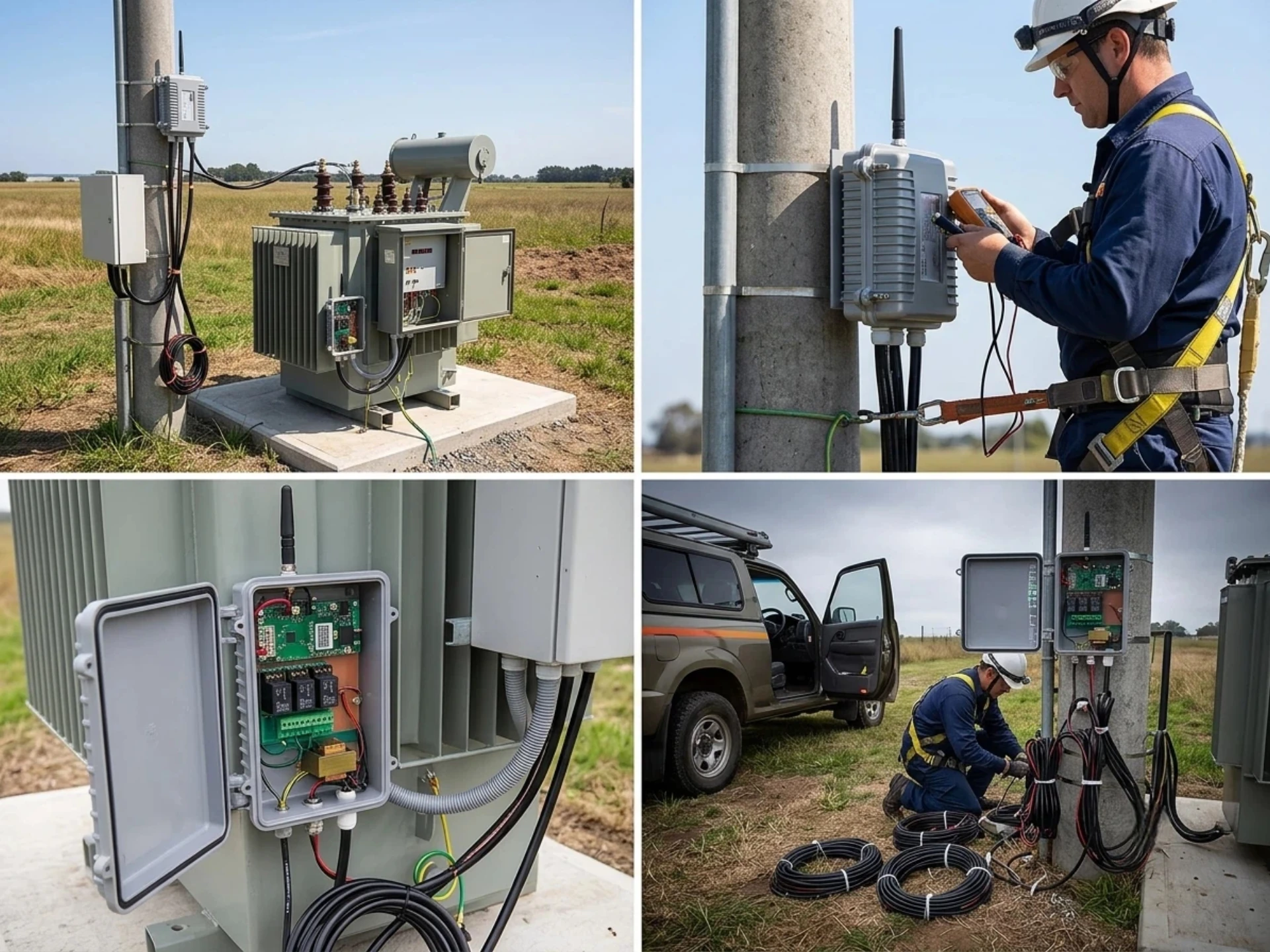
How to choose anti theft monitoring device for a given transformer site comes down to four decisions that are made in a fixed order, and the order matters more than the specifications, because a unit that wins every column of a comparison table can still be the wrong unit for a site with no night crew and no cellular coverage. The four decisions are what the unit has to sense, what the climate and the local pattern of interference require of the enclosure, which link can actually reach the site, and where the unit is physically mounted. Each decision removes options rather than adding features.
That ordering is not a preference. A specification written by sorting datasheets starts from the columns suppliers compete on, and those columns were chosen to be quotable rather than decisive. The two rows that decide whether an alarm changes an outcome, which are the backup runtime after the mains supply is cut and the interval between the first event and the first message, are rarely the rows printed at the top of the sheet.
This page keeps to selection. The anatomy of the theft itself, the layers that surround a device and the procedure that runs after an alarm belong to the guide to a transformer anti-theft monitoring system. Here the question is narrower: given one site, which configuration, and in what order.
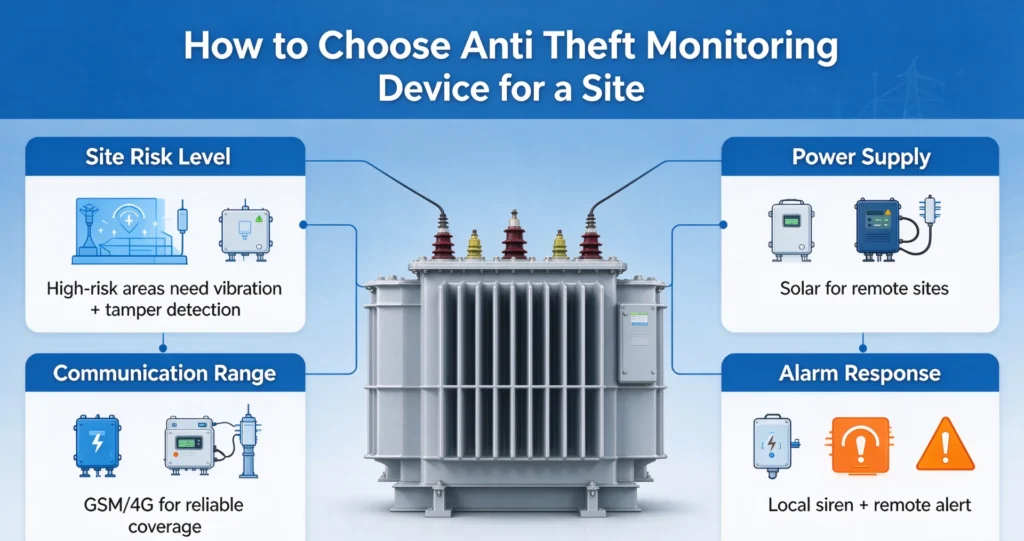
Key Takeaways
- Four decisions fix the result and they are taken in sequence: what must be sensed, what the enclosure has to survive, which link can reach the site, and where the unit is mounted.
- The two decisive rows on a parameter sheet are the backup runtime after the mains is cut and the reporting interval after an event, and neither is normally quoted in a form that can be compared between suppliers.
- Protection is three separate ratings rather than one. The ingress code covers what enters the enclosure, the impact code covers what strikes it, and the climate class covers the surroundings.
- The communication method follows the measurement, not the other way round, because a site with no usable signal cannot be specified around a standard.
- Installation position sets the ceiling on what any sensor can catch, since it decides which action in the removal sequence the unit is actually present for.
- A correct selection still cannot shorten a spare-parts queue, read energy taken through a lawful meter, or act without somebody who can reach the site at night.
Why Choosing a Device Is a Site Question, Not a Spec Question
The wrong way to choose is to sort competing units by the numbers that are easiest to compare, because the parameters that appear on a quotation sheet are selected to be quotable rather than decisive, and the columns they fill are the ones a buyer can rank without asking a single follow-up question. The two rows that govern whether an alarm reaches anybody are the backup runtime after the mains supply is cut and the interval between the first event and the first message, and neither of those is normally stated in a form that survives a side-by-side comparison.
A device is bought against a site, so how to choose anti theft monitoring device becomes answerable only after the site has been described in the four terms that follow. Two utilities with the same transformer rating and the same supplier shortlist can need different configurations, because one has a staffed control room that can dispatch a crew at two in the morning and the other has a contractor who answers the phone at seven. One has pole-mounted units along a road and the other has pad-mounted units behind a wall. One has a scrap dealer within an hour of the site; the other has material that must cross a border before anybody buys it.
| Decision | What it fixes | The question that answers it |
|---|---|---|
| What must be sensed | The sensor set | Which action in the removal sequence has to be caught |
| What the enclosure survives | Ingress, impact and climate ratings | What the vandalism pattern and the climate actually are |
| Which link reaches the site | Communication method and power budget | What the site survey measured, not what a standard offers |
| Where the unit sits | The earliest action the unit is present for | Whether the risk is removal, cabinet entry or conductor cutting |
Read in the other direction, the table is a list of ways to waste money. A unit specified for cabinet entry on a site where units are lifted whole is present for an event that never happens, while the event that does happen is the one it was mounted too low to sense. A unit specified for a long reporting interval on a site where the removal takes half an hour produces a record rather than a response. A unit specified for a link that does not reach the site produces nothing at all, and the failure is discovered after the installation invoice has been paid.
[UNIQUE INSIGHT] The selection problem is usually described as a choice between devices, and it is more accurately described as a choice between failure modes. Once the dominant failure mode at a site is written down, three of the four decisions have one defensible answer each, and the remaining variation between suppliers is confined to execution: whether the enclosure rating was verified against a standard, whether the runtime figure was measured at the site’s temperature, and whether the reporting interval survives a network that the supplier has not visited.
Anti Theft Monitor Technical Parameters: Which Rows Matter
Anti theft monitor technical parameters divide into rows that decide whether the project works and rows that decide only how comfortable the specification feels, and the decisive rows are almost never the ones printed at the top of a datasheet. A sheet is written to be read quickly, which pushes the quotable numbers upward and the conditional ones into a footnote or a conversation that never happens.
Four rows decide the outcome, and each one is a question about a condition rather than a number:
- Backup runtime after the mains supply is cut. This is the only parameter that is in direct opposition to the first action in most removal sequences, because cutting the incoming supply is how a crew avoids injury and how it disables the equipment that depends on that supply. The judgement is not the raw figure but the figure measured over the temperature range the site experiences, and the criterion is that it must cover one night-response window: roughly 8 to 12 hours where a staffed crew can be dispatched, and 24 to 72 hours where the response depends on an external contractor.
- Reporting interval and first-packet delay after an alarm. The steady-state interval, usually one report per day to one per hour, is a battery decision and not a security decision. What matters is the time between the event and the first message leaving the site, including the time the terminal needs to wake, attach to the network and complete a transmission. A useful criterion is that this must be shorter than the working time on site, which for whole-unit removal is typically 30 to 60 minutes.
- Attitude measurement range and resolution. A unit that reports movement must be able to tell wind and traffic vibration apart from a lift. If the range is too narrow, the accelerometer saturates and the signature of a lift becomes indistinguishable from a gust; if the resolution is too coarse, a slow tilt during a lift stays under the threshold. This row is the boundary between false alarms and missed events, and it is the one most often reduced to a single number in a specification.
- Sampling side and rated range. A terminal that reads voltage and current must be configured for the side it samples from. Low-voltage-side sampling avoids a planned outage and is limited to the secondary quantities of the local distribution grade, which is 10, 11, 20, 22 or 33 kV on the primary side depending on the country. Primary-side installation usually requires a switching window, which is a scheduling cost rather than a hardware cost.
A note on reading the runtime row, because it is the one most often quoted in a form that cannot be used. A battery capacity in milliampere-hours is not a runtime, and a runtime quoted without a temperature is not a specification either. Cell capacity falls as temperature drops, so the figure that matters is the reporting hours after the mains is cut at the lowest ambient the site reaches, which on a high-altitude or high-latitude site can sit well below the temperature at which the cell was characterised. Converting a capacity figure into a runtime also requires the average current of the terminal, and that average includes the receive window as well as the transmit burst, so a supplier who will not state the average current has effectively declined to answer the question.
The parameters below decide how pleasant the unit is to own rather than whether it works. They are worth comparing once the four decisive rows have been settled, and comparing them first is what produces the common error of buying the better-specified unit for the wrong duty.
| Comfort parameter | What it affects | When it can override the decisive rows |
|---|---|---|
| Enclosure dimensions and weight | Mounting effort and available space | Only where the cabinet physically cannot accept the unit |
| Positioning accuracy | Post-event traceability | Only where recovery of the material is plausible |
| Reported transmission rate | Data volume on the plan | Rarely; the payload is small in every realistic case |
| App and platform interface | Operator adoption | Where the control room will not use a second console |
| Local alarm output | On-site deterrence | Where a passer-by is the only possible responder |
The reason the decisive rows are neglected is structural rather than careless. Runtime, first-packet delay and attitude resolution are the parameters that only mean something against a described site, so a supplier who quotes them without a site survey is exposed, while a supplier who quotes dimensions and accuracy is exposed to nothing. Ask for the conditional figures and the sheet changes shape.
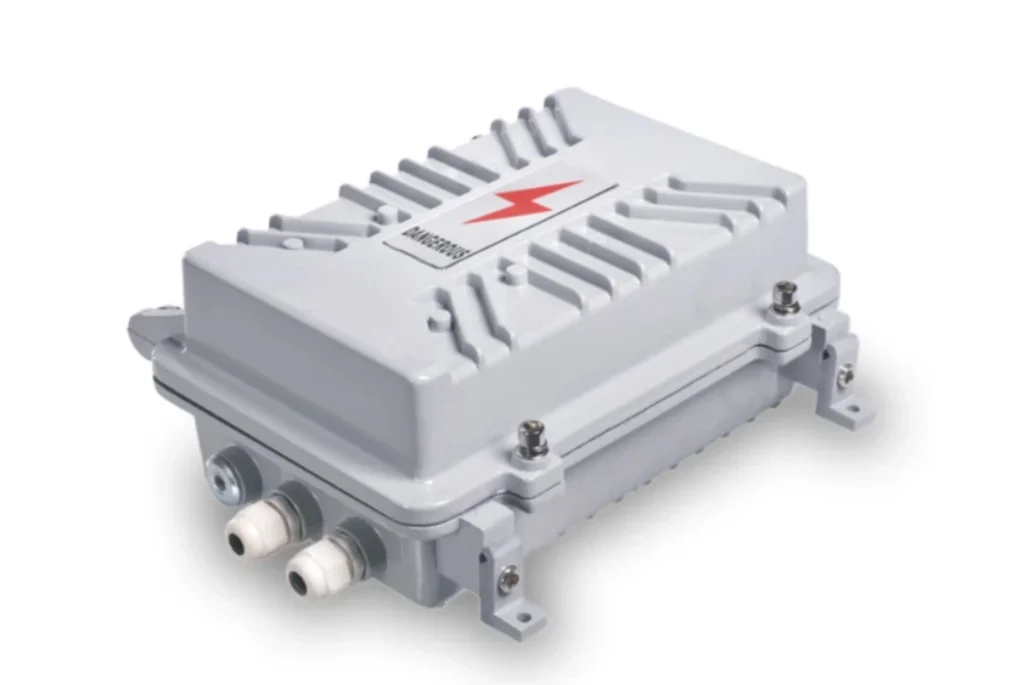
Detection channel selection follows the same logic and is treated in more depth on the pages covering vibration based theft detection and tilt and displacement detection; this page treats them as rows to be specified rather than as sensing principles to be explained.
Protection Rating of Anti Theft Device: IP, IK and Climate Class
Protection rating of anti theft device is normally quoted as one ingress number, and that number answers a question most sites never ask, because an ingress code describes what can enter the enclosure and says nothing at all about what can strike it. Three separate ratings cover three separate threats, and only one of the three is normally printed on a quotation.
The ingress code. The IP rating under IEC 60529:1989+AMD1:1999+AMD2:2013 grades two things: protection against solid objects and protection against water. The familiar steps are IP65 for water projected by a nozzle, IP66 for powerful water jets and IP67 for temporary immersion. For an outdoor distribution cabinet the difference that matters in practice is small, because the realistic risk is rain, dust and hose-down during maintenance rather than sustained immersion. Paying for a higher ingress step than the installation needs is the most common way to spend on this dimension without changing the outcome.
The impact code. The IK rating under IEC 62262:2002+AMD1:2021 grades resistance to external mechanical impact and is expressed in joules. IK08 corresponds to 5 joules and IK10 to 20 joules. As an engineering approximation, 5 joules is in the range of a roughly 1.7 kilogram object dropped from about 30 centimetres, which is a hand tool or a piece of scrap rather than a deliberate sledgehammer. The units are the ones that answer the actual question on a vandalised site, and the ones most often left off a specification.
The climate class. The third rating is the environmental classification for stationary use at non-weatherprotected locations under IEC 60721-3-4:2019, which covers temperature range, humidity, salt mist and blowing dust. Two sites with identical ingress and impact numbers can differ by several years of service life if one sits on a salt-bearing coast and the other sits in a dry, dust-laden interior, because the mechanisms that age a sealed enclosure are different. This is the rating that converts a national climate description into something a manufacturer can be held to.
| Rating layer | The question it answers | Standard | Typical values | Order |
|---|---|---|---|---|
| Climate class | What does the surrounding air do to it | IEC 60721-3-4:2019 | Non-weatherprotected classes covering heat, salt mist and dust | 1 |
| Impact code | What does it survive being hit with | IEC 62262:2002+AMD1:2021 | IK08 around 5 J; IK10 around 20 J | 2 |
| Ingress code | What gets inside the box | IEC 60529:1989+AMD1:1999+AMD2:2013 | IP65, IP66, IP67 | 3 |
The order in the last column is the part that is usually inverted. The defensible sequence is to fix the impact rating first from the local pattern of interference, then the climate class from the site’s actual environment, and only then the ingress rating from whether water can collect where the unit is mounted. Doing it in that order keeps the two ratings that cost money and require verification at the front of the conversation, and it keeps the ingress number where it belongs, which is as a baseline any industrial enclosure already meets.
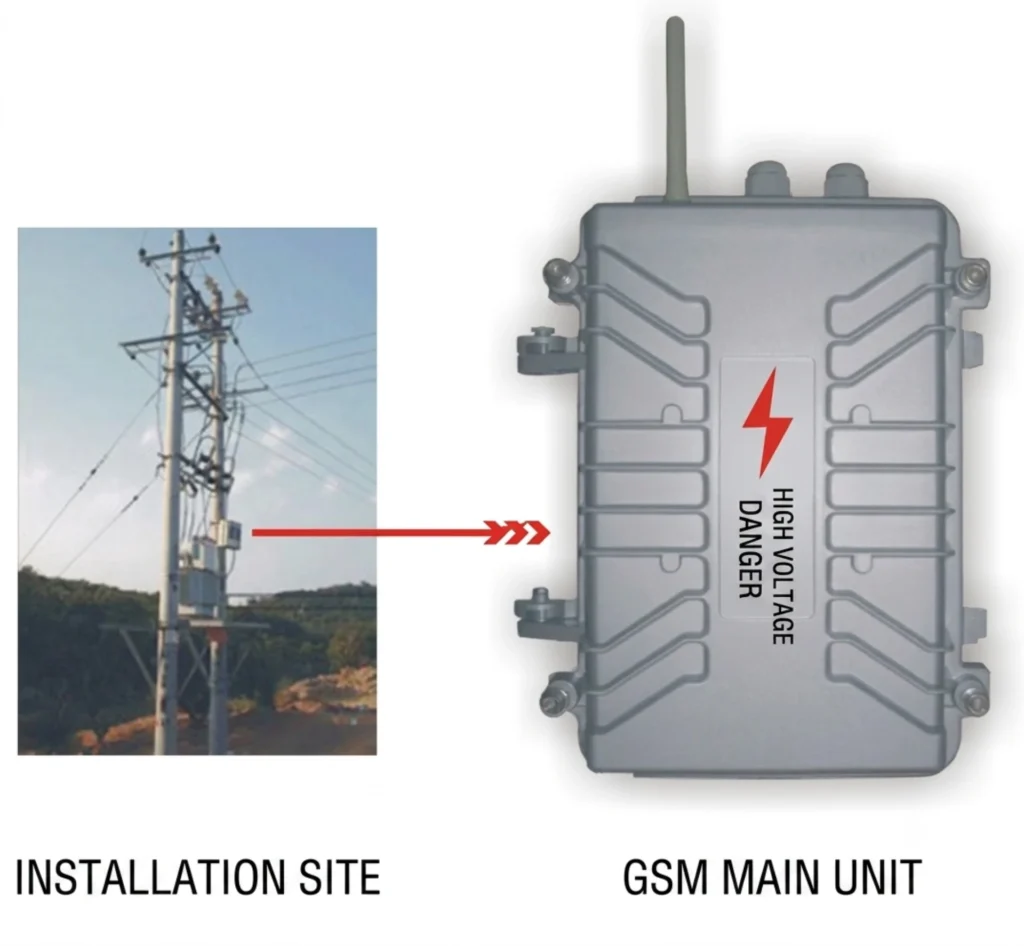
The verification question is what separates two quotations that otherwise look identical. An impact code quoted without a report is a claim; the same code with the issuing laboratory and the test condition named is a specification. The practical step is to ask for the report that covers the rating the site needs, taken over the temperature range the site reaches, because impact behaviour and seal behaviour both change with temperature and a report produced at a comfortable ambient does not describe a coastal enclosure at noon. Where the report cannot be produced, the rating should be treated as unverified and the comparison should proceed on the rows that were verified.
Communication Method of Anti Theft Monitor: A Coverage Decision
Communication method of anti theft monitor is a coverage question before it is a technology question, so the measurement comes first and the standard comes second, and a specification that names a standard before anybody has measured the site has been written the wrong way round. The comparison of the technologies themselves is a separate subject, treated on the remote monitoring communication page; what follows is only the decision.
Four criteria settle the choice, and the first one is physical:
- Measured coverage at the specific mounting point. Coverage is a property of a location, not of a country. A site that is 300 metres off a main road can sit in a coverage hole that no national map shows, and the elevation of a pole-mounted cabinet changes the answer again. The survey should record a signal measurement at the transformer itself, taken at the height the terminal will be mounted, and the survey should be repeated in the season when foliage is dense if the site is under canopy.
- Reporting model and its tolerance for delay. A theft terminal is an event-driven device that is idle most of the time, and the technologies differ most in how long they take to wake, attach and deliver a first packet from that idle state. A device that reports once a day has almost no requirement here; a device that must deliver an alarm inside five minutes does, and the requirement should be written against the first-packet figure rather than the nominal rate.
- Power budget, which is where this decision couples to the previous sections. On a site with no reliable auxiliary supply, the energy spent on the link is drawn from the same battery that provides the backup runtime. A higher-bandwidth link with a higher duty cycle therefore reduces the window that the runtime was chosen to cover. The two figures have to be settled together or one will quietly consume the other.
- Operator risk over the project life. A single subscriber identity module bound to a single operator is a five-year exposure, because bands are refarmed and older generations are retired while the equipment stays in the field. The defensible requirement is not a specific generation but the ability to change operator and access point remotely, or to fall back to a second network without a site visit.
| Site condition | What the condition removes | What remains defensible |
|---|---|---|
| No usable signal at the mounting point | Any remote alarm path | Local alarm plus a store-and-forward record with a scheduled collection |
| Weak but present signal | High-duty-cycle reporting | Short, event-driven packets on the link with the best first-packet behaviour |
| Reliable coverage, mains supply present | The power constraint | The link chosen on first-packet delay and platform compatibility |
| Reliable coverage, no mains supply | High duty cycles entirely | Lowest idle and transmit energy per alarm, with the runtime verified together |
| Coverage that changes seasonally | A single fixed configuration | A link with automatic fallback, tested in the worst season |
The decision that most often goes wrong is not the choice of technology but the omission of the measurement. A configuration copied from a neighbouring site arrives with a plausible link and an unverified assumption, and because the terminal still registers on the network when it is installed, the fault appears later as an alarm that arrives late rather than as an installation that fails. A separate trap is the measurement itself. A survey taken in the dry season can show a workable signal that disappears when the canopy closes, and a survey taken from inside a vehicle can show a signal that is not present at the height the terminal will be mounted. Both errors produce the same result, which is a device that registers on the network at installation and then fails to deliver on the one night it mattered. Where coverage is marginal, the configuration should be tested in the worst season before the balance of the fleet is ordered, and the measured value should be recorded with its date and conditions rather than as a single figure that outlives them.
Installation Method of Anti Theft Monitor: Position Sets the Sense
Installation method of anti theft monitor decides what the unit can sense before the event is over, because a sensor can only report the actions that happen in front of it, and a position chosen for concealment will miss the actions that take place before the enclosure is opened. Three positions are available on a distribution transformer, and each one is present for a different part of the sequence.
- Inside the cabinet, hidden from view. Concealment is the strongest passive property available, because a unit that cannot be located cannot be deliberately disabled. The cost is timing. A hidden terminal inside the enclosure is present from the moment the door is opened, which means a crew that lifts the whole unit off its mounting takes the terminal with it and the removal is reported from wherever the unit is later abandoned. This position suits sites where the dominant risk is entry and conductor work rather than whole-unit removal, and it depends on an internal backup supply and on the antenna lead being routed out of the enclosure without becoming the weakest point in the assembly.
- Outside the enclosure, on the structure but out of sight. A terminal fixed to the rear face or the inner side of the support bracket is present before the cabinet is opened, so it can report the impulse of a lift or a drag while the unit is still on site. The trade is exposure: a terminal outside the enclosure can be found by touch, so it has to carry its own tamper channel and its own protection ratings rather than relying on the cabinet for them.
- On the unit or at the conductor termination. A sensor mounted at the low-voltage termination or near the connection hardware is present for conductor cutting and for the disconnection that precedes most removals. It is the most direct position for that specific action and the least useful for anything else, and it usually requires a switching window to install.
| Position | Earliest action it can sense | Outage needed | Exposure to a determined crew |
|---|---|---|---|
| Inside the cabinet, concealed | Cabinet entry | No, if the cabinet can be opened safely | Lowest |
| Outside on the structure | Lift, drag or tilt of the unit | No | Medium |
| At the unit or termination | Conductor cutting and disconnection | Usually yes | Highest |
| Engineering detail | What goes wrong when it is left open | What to specify instead |
|---|---|---|
| Antenna routing | The lead becomes a handle, or it is cut first because it is the visible part | A route that keeps clear of the high-voltage side, secured independently of the terminal |
| Installation window | A primary-side install is deferred until a switching request is granted, which can be a season | Low-voltage-side sampling wherever the operator cannot grant an outage |
| Fixing method | A magnetic mount migrates under years of traffic vibration and produces movement alarms | A mechanical fixing sized for the mounting surface, with the position recorded on the asset |
The record left behind matters as much as the position itself, and it is the part that is usually missing. A commissioning note should capture the mounting height, the fixing hardware, the antenna route and the sample point, because those four facts decide whether the next unit on the same feeder can be installed from the file or has to be surveyed again. Where a programme covers several hundred sites, that note is the difference between a repeatable configuration and a repeated survey, and it is also what makes a later incident review possible.
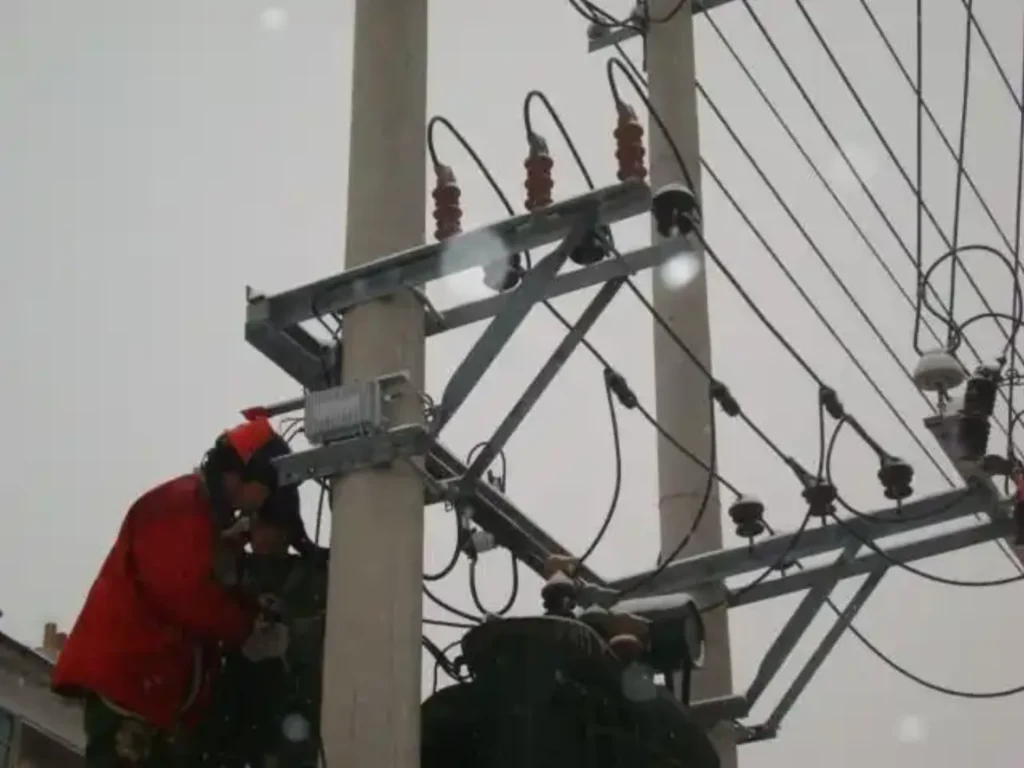
Two related positions belong to other pages rather than this one. Pole-mounted units have their own geometry and their own removal sequence, treated on the guide to protecting pole mounted transformers, and conductor cutting has a dedicated sensing treatment on the cable cutting detection page. Here the position is a selection variable, and the criterion for it is which action in the sequence the unit has to be present for.
Does an Anti Theft Monitor Really Work? The Delay Arithmetic
Does an anti theft monitor really work is answerable with arithmetic rather than with a case study, because the device changes exactly one variable, which is the delay between the first action on site and the moment somebody knows about it. Everything else in the outcome is decided by systems that sit outside the equipment.
The condition for the device to change an outcome is an inequality:
Alarm delay + response delay < working time on site.
All three terms are measurable on a real site, which is what makes the test useful rather than rhetorical. The working time is the elapsed time between the first action and the point at which the material or the unit has left. The alarm delay is the first-packet figure discussed earlier, plus whatever time the platform spends turning that packet into a notification that a human sees. The response delay is the time for a person to reach the site, and it is the term that varies most between utilities rather than between devices.
| Term | Typical working range | What it is set by | Can the device change it |
|---|---|---|---|
| Working time on site | 30 to 60 minutes for whole-unit removal | Crew method and equipment | No |
| Alarm delay | Under 5 minutes where the link is short and the platform is monitored | Link behaviour and platform integration | Partly |
| Response delay | 30 to 90 minutes with a staffed crew; next morning without one | Staffing and road distance | No |
Read against the table, the device is worth buying where the response delay is short enough for the sum to fit inside the working time, and it is worth buying for a different reason where the response delay is long. In the second case it does not produce interceptions; it produces a timestamped event record, which is what a utility needs to allocate patrols, to order a replacement in the right sequence and to argue a budget case with its own incident data rather than with a regional figure.
The middle term is the one that is easiest to measure and least often measured. Response delay is not a policy, it is the elapsed time between a notification being seen by a person and a crew arriving at the site, and it can be read off the utility’s own incident records for the last dozen events on the feeder. Where those records do not exist, the honest starting point is a single timed exercise on a representative site at night. The result is usually longer than the estimate carried in the business case, and shortening it through a shift arrangement or a standing call on a nearby contractor changes the outcome more than any change of terminal.
Three situations sit outside the range where a device helps at all, and recognising them before purchase is part of the selection work:
- Where the loss is electrical rather than physical. A unit on the transformer cannot see energy that leaves through a lawful connection. Where the dominant loss is unmetered consumption, the transformer is the entry point for the energy rather than the object being attacked, and the instrument is the meter and the load record. The wider structure of that problem is on the distribution transformer theft page.
- Where there is no night response and no coverage. With no link and nobody to send, a terminal produces a record that is collected later. That can still be worth having, but it should be bought as a record-keeping function rather than as an alarm.
- Where the binding constraint is the replacement queue. If a destroyed unit waits months for a spare, faster detection shortens the record and not the outage. The measuring instrument is the store position, not the sensor set.
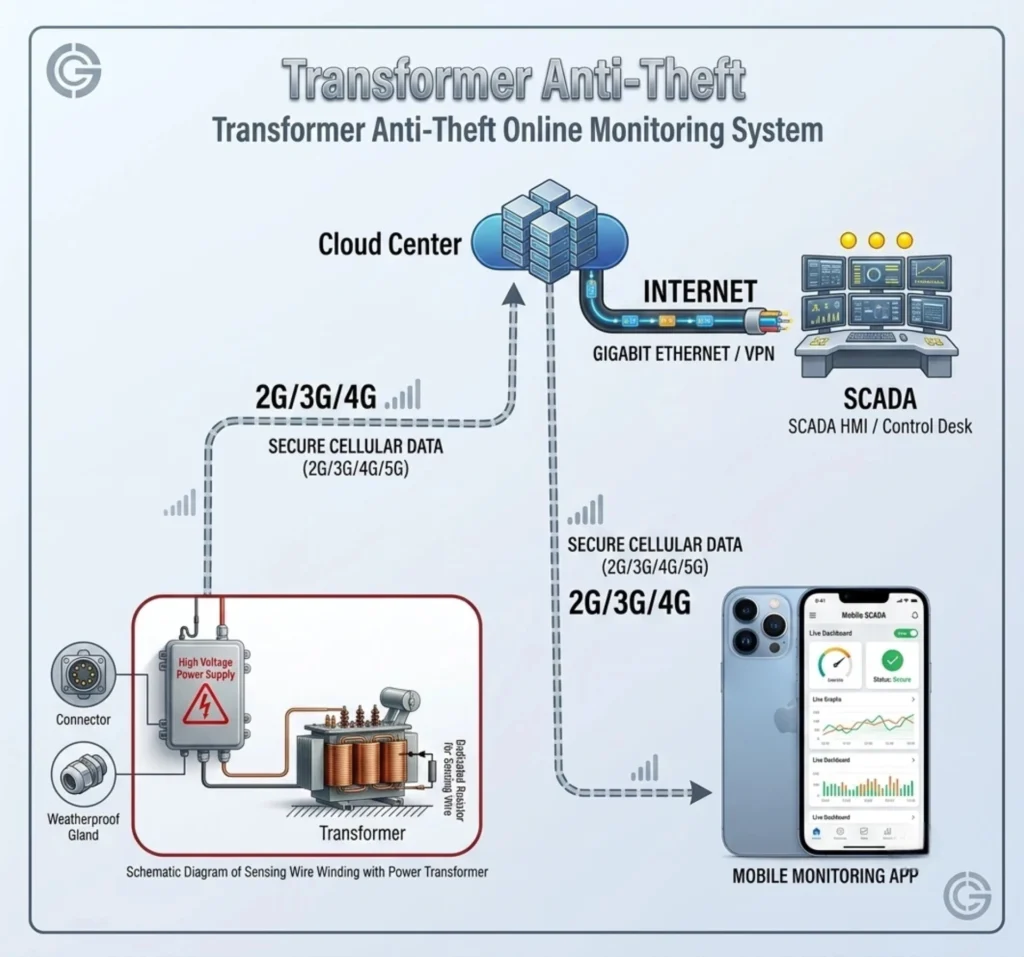
The detection chain that produces the first-packet figure, including how each sensing channel behaves and where it fails, is set out on the transformer theft detection page. What this page adds is the criterion: a device works when the three terms above can be filled in with numbers from the actual site, and the exercise of collecting them is more useful than any product comparison.
How to Choose Anti Theft Monitoring Device for One Specific Site
Choosing for one specific site is a five-step sequence rather than a side-by-side comparison of catalogues, and the reason to run it in order is that each step removes options instead of adding them, which is the opposite of how a quotation usually arrives. The failure mode picks the sensor set, the climate and the coverage pick the enclosure and the link, and the response capability decides how short the alarm path has to be.
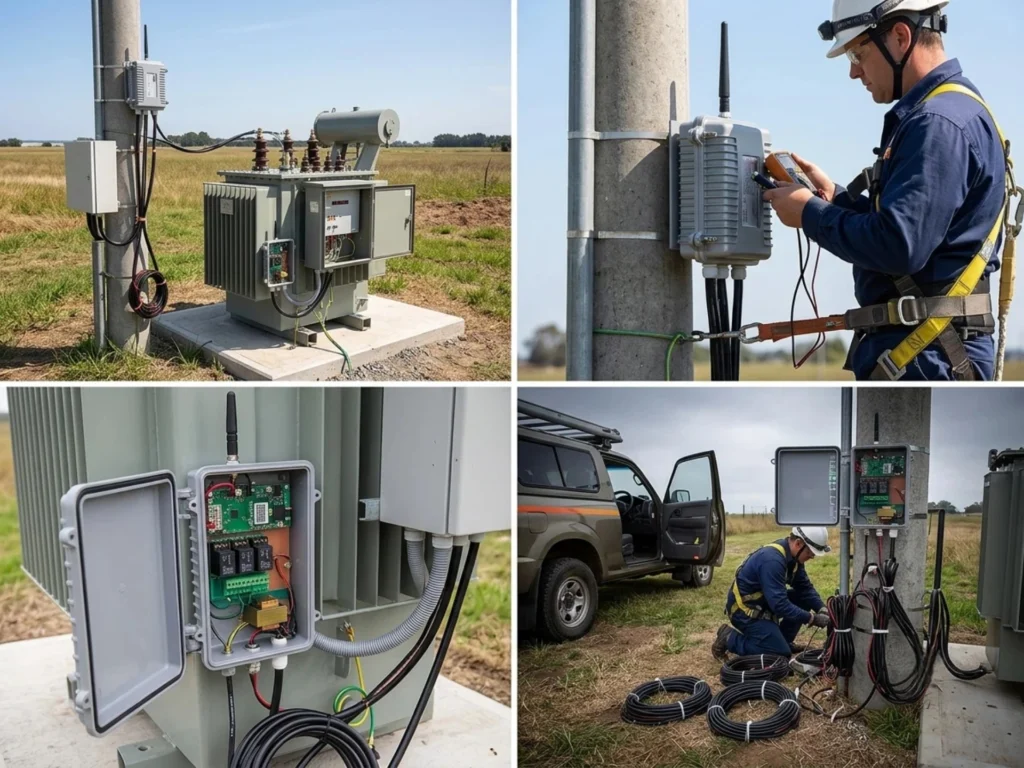
The reason the order matters is that each step constrains the next one rather than merely informing it. A configuration reached in this order can always be defended by referring back to a site fact; a configuration reached by comparing quotations has no such anchor and changes whenever a supplier changes a datasheet.
| Step | The question to answer | What it fixes | What it removes |
|---|---|---|---|
| 1 | Which action in the removal sequence is dominant here | Sensing channels | Channels that watch actions this site does not experience |
| 2 | What the climate and the interference pattern are | Impact and climate ratings | Enclosure options that were never verified against the local conditions |
| 3 | What the coverage and the auxiliary supply measured | Link and power budget | Links and duty cycles the site cannot support |
| 4 | How fast a person can reach the site at night | Required alarm delay and runtime | Reporting intervals that cannot produce a usable notification |
| 5 | Where the unit can be mounted and when | Mounting position and installation window | Positions that require an outage the operator cannot grant |
Where a step cannot be completed, the answer is to record the gap rather than to fill it with an assumption. A survey that cannot reach the transformer at night leaves the response term unknown, and the configuration that follows should then be the one least sensitive to that unknown, which usually means the longer runtime and the store-and-forward record rather than the shortest reporting interval. Writing the gap into the commissioning file keeps it visible at the next review, whereas an assumed value disappears into the specification and is rediscovered later as a site that underperforms without anybody knowing why.
Each step should leave three answers behind, and those three answers are the whole of the audit trail. | Step | First answer to record | Second answer | Third answer |
| 1 | Dominant action at this site | Secondary action worth catching | The action declared out of scope |
|---|---|---|---|
| 2 | Impact rating | Climate class | Ambient extremes the site actually reaches |
| 3 | Measured signal level at the mounting height | Auxiliary supply condition | Seasonal caveat where coverage changes |
| 4 | Measured response time at night | Runtime the site needs | First-packet figure the supplier committed to |
| 5 | Mounting position | Fixing method | Installation window available |
The cost of running the sequence in reverse is concrete and predictable. A desert site specified by comparing ingress ratings gets a high ingress number and no verified impact rating, which is the dimension the local interference pattern actually stresses. A site with seasonal coverage specified around a single link gets an installation that works for part of the year and a fault that appears as an alarm arriving late rather than as a broken device. A site with a long response time specified around the shortest available reporting interval spends its battery on messages that nobody can act on, which shortens the very runtime that was chosen to cover the night.
How to Compare Two Quotations for the Same Site
Two quotations for the same site are usually not comparable because they were not asked the same questions, so the useful step is to send one list of verifiable questions to every supplier before comparing anything, and to treat a yes-or-no answer as an incomplete answer. The list below is written so that how to choose anti theft monitoring device turns into a document that can be checked rather than an impression that has to be trusted.
Each item has a verifiable form and an unhelpful form, and the difference between them is what makes the comparison possible. The unhelpful form is the specification as it usually arrives; the verifiable form is the same claim with a condition attached.
| What to ask | The answer that can be checked | The answer that cannot |
|---|---|---|
| Backup runtime | Hours of reporting after the mains is cut, at the lowest ambient temperature the site reaches | A battery capacity in milliampere-hours |
| First-packet delay | Time from event to the first message reaching the platform, measured on a live network | A nominal transmission rate |
| Steady-state reporting | Interval in normal operation and whether it is configurable | A statement that interval is flexible |
| Impact rating | The impact code and the laboratory that issued the report | A description of the housing as heavy duty |
| Climate class | The environmental class claimed and the temperature range it covers | A statement that it suits hot climates |
| Ingress rating | The ingress code and whether it was verified as part of the same report | A claim of being weatherproof |
| Mounting position | The recommended position and whether the cabinet door must be opened first | A mounting diagram without the sequence |
| Outage window | Whether installation requires a switching window and how long it is | A statement that installation is simple |
| Factory test | Which actions are triggered during acceptance testing and what is recorded | A certificate of quality |
| Spare parts and link change | What the kit contains, the lead time, and how the operator can be changed remotely | A statement of full after-sales support |
The pattern behind the table is that a verifiable answer always names a condition, an instrument or a document, and an unverifiable answer names a property. Sending the list costs one email and it changes the shape of every reply, because a supplier who cannot fill in the first-packet column will either measure it or say so, and both responses are more useful than a plausible number. When the equipment is a transformer anti theft monitoring device from a defined catalogue, most of these answers are already fixed and the comparison collapses to the configuration questions: which sensing channels, which ratings and which position, all of which remain site decisions. Where the answers are still open, that is exactly the point at which to request a datasheet with the four decisive rows filled in, because a datasheet that omits them cannot be compared with one that contains them.
Limitations: What a Correct Selection Still Cannot Fix
Six limits survive a selection that has been made correctly, and stating them is part of the engineering rather than a disclaimer, because each one identifies the department that has to move before the device can pay for itself. None of the six is a defect in the equipment, and each one changes what the business case is allowed to claim when the programme is reviewed.
- It cannot prevent physical contact with the transformer. No configuration blocks a crew from reaching the unit; what it changes is how quickly somebody knows, and that in turn depends on a response capability the site either has or does not have.
- It cannot shorten a spare-parts queue or a foreign-currency allocation. Where the replacement of a destroyed unit is rationed, faster detection records the loss earlier without shortening the outage.
- It cannot see energy that leaves through a lawful connection. Where the dominant loss is unmetered consumption, the instrument is the meter and the load record rather than any device on the transformer.
- It cannot report from a site with no coverage and no backhaul. In that condition the terminal can produce a local alarm and a stored record, and both are useful, but neither is a remote alarm and the difference should be written into the specification rather than discovered afterwards.
- It cannot compensate for a mounting position that is wrong for the dominant action. A correctly rated unit in the wrong place produces accurate data about the wrong event.
- It cannot replace an incident record and a measured response time. Without those two inputs the configuration can be installed but not evaluated, and the next review will have nothing to compare against.
How Houfeng Supports a Device Selection Programme
The useful output for a utility or an engineering contractor is a configuration that matches the site rather than a catalogue number, so the sequence starts with the site list and ends with a factory record that can be repeated on the next batch without renegotiating the specification. Each deliverable below answers one of the four decisions from the first section, which is what makes the sheet checkable rather than persuasive.
| What we ask for | What we return | What it settles |
|---|---|---|
| How to choose anti theft monitoring device: the site list — mounting type, transformer rating, measured coverage, night-response capability | A configuration sheet per site class | Sensing channels, ratings, link and mounting position |
| The climate extremes and the interference pattern seen locally | An enclosure specification with the ratings that were verified | Impact, climate and ingress values the quotation can be held to |
| The actions that must be caught and the actions that are out of scope | A channel plan with the reporting intervals per channel | What the terminal reports and how often it transmits |
| The installation window available to the operator | A mounting and wiring plan with the outage requirement stated | Whether the install is scheduled or requires a switching request |
| The acceptance actions the operator wants to witness | A factory test record listing every triggered action | Whether the shipment satisfies the specification before it leaves |
The configuration is delivered as one order rather than as a hardware list, and it includes the accessories that decide whether the chosen position works: the antenna arrangement, the fixing hardware for the mounting surface, and the spares that match the response capability the site actually has. For a programme covering several site classes, send us your requirement with the site list and we will return the configuration sheet before any quotation is issued, so the comparison happens on the same terms across the fleet.
Frequently Asked Questions
Which parameters of an anti theft monitor actually decide the outcome? Four of them: the backup runtime after the mains is cut, the first-packet delay from event to message, the attitude measurement range and resolution, and the sampling side with its rated range. Everything else on a datasheet affects comfort rather than outcome. The runtime should cover one night-response window measured at the site’s lowest ambient temperature, and the first-packet delay should be shorter than the working time on site, which is typically 30 to 60 minutes for whole-unit removal.
What protection rating does a coastal or desert transformer site need? Three ratings rather than one. Fix the impact code first, because it answers the local interference pattern, then the environmental class, which covers salt mist on a coast and blowing dust inland, and only then the ingress code. A coastal site ages an enclosure through salt corrosion while a desert site ages it through abrasion and temperature cycling, and the same ingress number describes neither of those mechanisms, which is why a single IP figure is a weak basis for choosing between two units.
Which communication method should I specify where there is no 4G coverage? None of them, until the site has been measured. Coverage is a property of a mounting point rather than of a region, so the survey should record a signal figure at the transformer, at the height the terminal will sit, and it should be repeated in the season when foliage is dense. Where the measurement shows weak but usable coverage, the requirement is the shortest first-packet delay rather than the highest bandwidth, and the configuration should support a change of operator and access point without a site visit.
Where should the unit be installed if the main risk is whole-unit removal? Outside the enclosure but out of sight, on the structure or the support bracket, because that position is present before the cabinet is opened and can report the impulse of a lift while the unit is still on site. A terminal concealed inside the cabinet is stronger against a determined crew and weaker against this particular action, since a whole-unit lift carries the terminal away with the load and the event is reported from wherever the unit is later abandoned.
How long should the backup power last after the mains supply is cut? One night-response window as a minimum, which is roughly 8 to 12 hours where a staffed crew can be dispatched and 24 to 72 hours where the response depends on an external contractor. The figure has to be quoted at the lowest ambient temperature the site reaches rather than at room temperature, and it has to be quoted alongside the energy the link consumes per alarm, because on a site with no auxiliary supply the two figures are drawn from the same battery.
Can one device selection serve both pole-mounted and pad-mounted units? The electronics can, and the configuration usually cannot. The two mounting forms expose different faces to a crew, produce different vibration signatures during a lift, and reach the conductor at different heights, so the channel plan and the mounting hardware differ even when the terminal is the same. A programme covering both should be split into site classes, with the decisive rows fixed once and the position and channel plan decided per class.
What must a supplier answer before a device selection is signed off? Ten things, and each should come with a condition attached rather than a property: runtime at the site’s lowest temperature, first-packet delay measured on a live network, the configurable reporting interval, the impact code with the issuing laboratory, the environmental class, the ingress code, the recommended mounting position with the sequence it is present for, the outage requirement, the factory test actions that will be recorded, and the spare-parts kit with the lead time. A supplier who can fill in all ten, in the same units, produces quotations that can be compared; a supplier who cannot produces quotations that must be trusted, which is the more expensive of the two arrangements, and it is what makes how to choose anti theft monitoring device a question about evidence rather than about hardware.
Conclusion and References
The selection that survives a review is the one that can name the failure mode it was bought for, the climate class it was verified against and the response capability it was sized to, because those three answers are what make the specification checkable a year later. How to choose anti theft monitoring device is therefore a sequence with four fixed decisions inside it, and the value of the sequence is that it leaves a record. When a unit underperforms, the record shows whether the site was described wrongly, whether a rating was claimed without verification, or whether the response capability was assumed rather than measured.
The practical instruction is short. Describe the site in the four terms before opening a quotation, put the four decisive rows into the enquiry, and treat every answer that does not carry a condition as an answer that has not yet been given. The configuration that results will not be the most heavily specified one on the shortlist, and it will be the one that can be defended when the first incident is reviewed.
Sources
- IEC 60721-3-4:2019, Classification of environmental conditions — Part 3-4: Stationary use at non-weatherprotected locations, IEC TC 104 (retrieved 4 October 2026).
- IEC 60529:1989+AMD1:1999+AMD2:2013, Degrees of protection provided by enclosures (IP Code), IEC TC 70 (text citation).
- IEC 62262:2002+AMD1:2021, Degrees of protection provided by enclosures for electrical equipment against external mechanical impacts (IK code), IEC TC 70 (text citation).
- IEC 60068-2-27:2008, Environmental testing — Part 2-27: Tests — Test Ea and guidance: Shock, IEC TC 104 (text citation).
- Site survey practice described in this page, including coverage measurement at the mounting height and runtime verification at the site’s lowest ambient temperature, reflects field commissioning practice in outdoor distribution projects rather than a published standard (text citation).
Written by the engineering content team at Baoding Houfeng Trading Co., Ltd., which works with utilities, EPC contractors and distribution operators on transformer monitoring and protection projects. Technically reviewed by [Reviewer name], senior distribution protection engineer, [X] years in distribution network operations (to be confirmed by the client). Last updated: 4 October 2026.