
Power Tester: Selection Guide and Key Specs
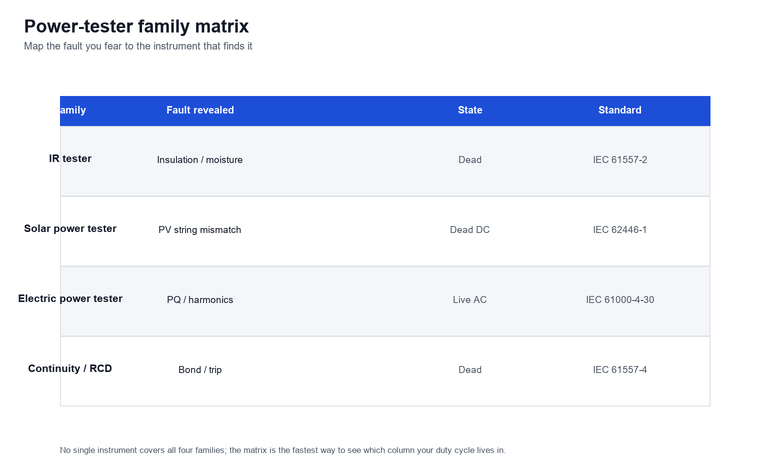
A power tester proves a circuit is safe before energizing it; pick the model by the fault it must reveal, not by display size or spec-sheet length.


Field testing depends on instruments that hold their calibration and produce a number worth writing into a report. This section covers the instruments themselves — hi-pot sets, insulation resistance testers, ground resistance testers, clamp meters, power quality analyzers, relay test sets and current transformer simulation — what each one measures, how the reading is interpreted against a standard or a previous result, and what to check before you trust it.
A power tester proves a circuit is safe before energizing it; pick the model by the fault it must reveal, not by display size or spec-sheet length.
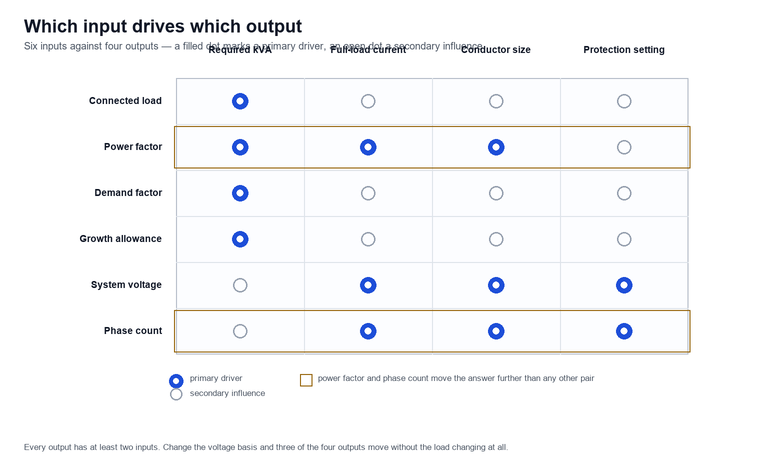
How a transformer calculator turns connected load into a kVA rating, full-load current, conductor size and protection setting — and how to check the answer.

How to specify a digital multimeter for electricians: the four jobs, CAT III and CAT IV ratings, 7-function labels, accuracy formulas and test setup.
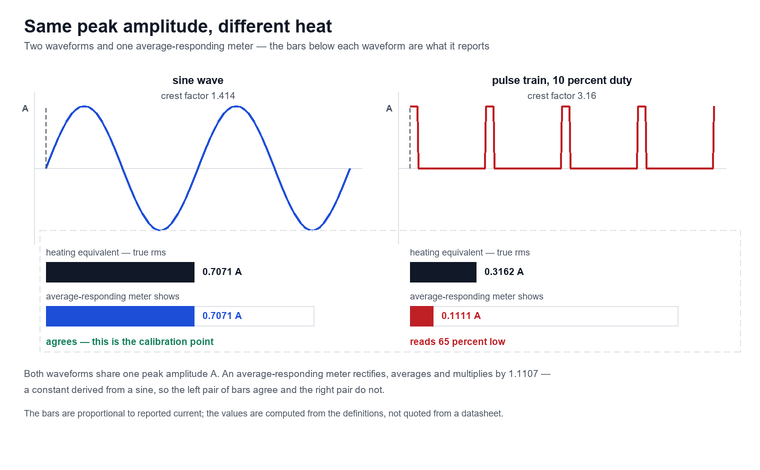
How to specify a multimeter with true rms: what the claim promises, AC bandwidth and crest-factor limits, clamp sensors and how to prove the reading on site.
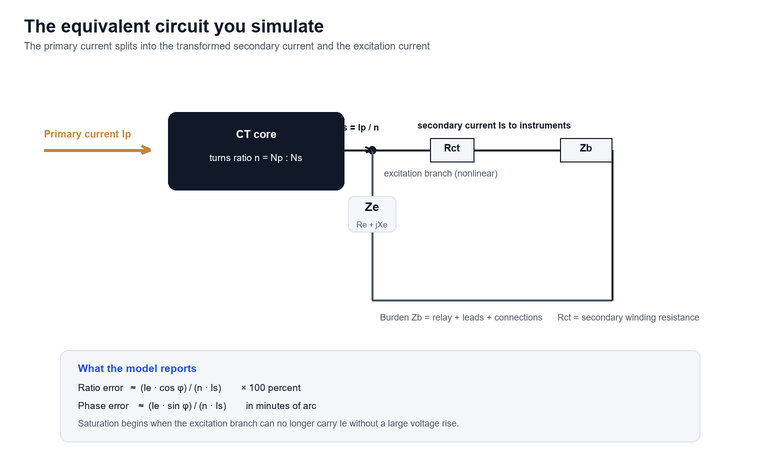
Current transformer simulation predicts ratio error, phase error and saturation so protection and metering accuracy can be verified before energisation.

Insulating and arc-quenching in one volume, sf6 gas is also a regulated greenhouse gas; match the detector, analyzer and density gauge to the question asked.
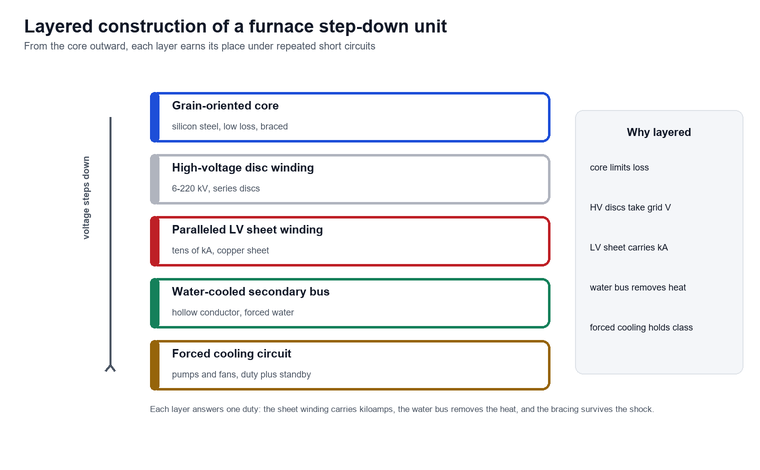
A furnace transformer turns grid voltage into the low voltage and high current an arc furnace needs; buy the duty, not the nameplate, and test it right.
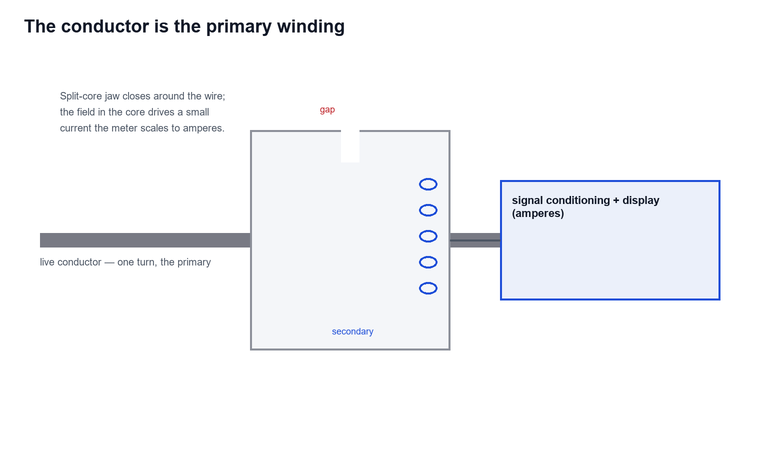
A current clamp meter measures live current without breaking the circuit; this selection guide covers types, key specifications, true RMS and safe test setup.
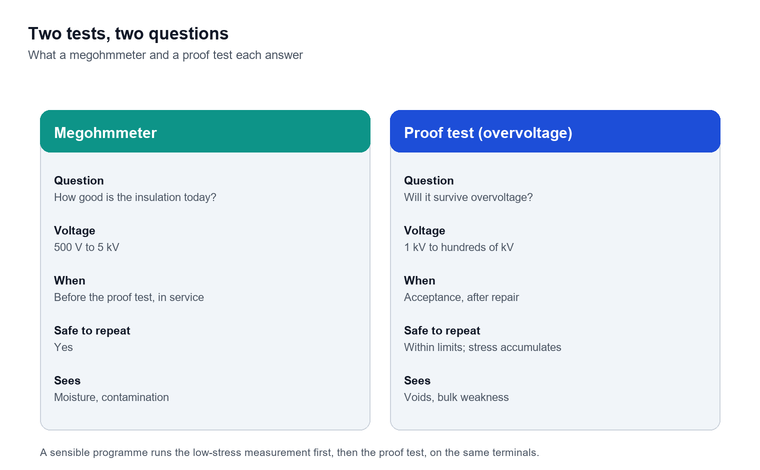
Hi pot testing stresses insulation out of service with an overvoltage and watches the leakage; this guide covers voltage selection, AC/DC/VLF choice and setup.
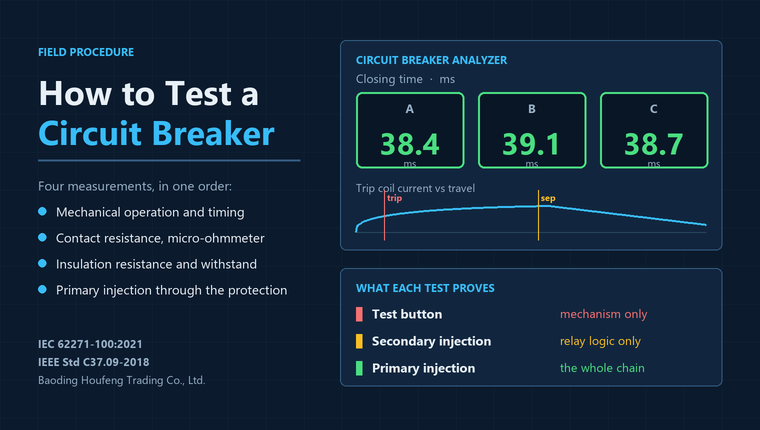
How to test a circuit breaker step by step: prove dead, measure contacts and insulation, and prove the protection operates the breaker.