Leave your message

-
Leon Zhang sales consultant
-
Email: zxl635973785@gmail.com
-
Phone/WhatsApp/Wechat: +86 13655813266

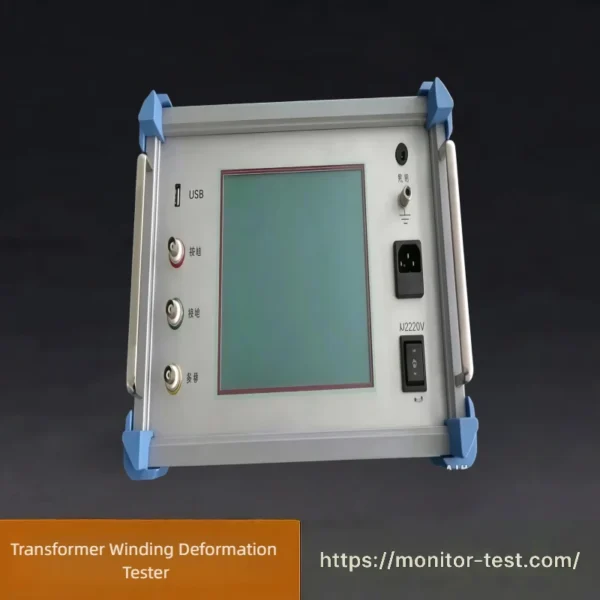
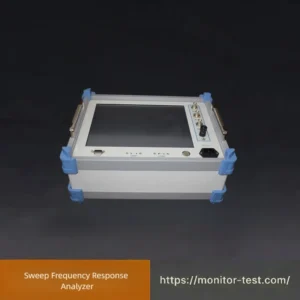
HF-TC-647 Transformer Winding Deformation Tester
This Transformer Winding Deformation Tester adopts frequency response analysis method. It compares characteristic curves to judge winding displacement, distortion and short-circuit faults, widely used for transformer handover and preventive tests.
Send your requirements, we will quote for you within 12 hours
HF-TC-647 Transformer Winding Deformation Tester adopts two testing methods to measure and diagnose windings of medium and large transformers: Sweep Frequency Response Analysis (SFRA) and Low-Voltage Impedance Method.
Only connecting busbars need to be removed during testing. All measurements can be completed without hoisting or disassembling the transformer.
The instrument features high intelligence and easy operation. It is equipped with an adaptive filter, automatic range adjustment, automatic sweep frequency adjustment and other functions.
Built-in professional diagnosis system, which can automatically evaluate the operating condition of transformer windings.
The instrument features high intelligence and easy operation. It is equipped with an adaptive filter, automatic range adjustment, automatic sweep frequency adjustment and other functions.
Built-in professional diagnosis system, which can automatically evaluate the operating condition of transformer windings.
The tester consists of measurement unit and analysis software. The measurement unit is a hardware box including signal generation and signal acquisition modules. The analysis part runs on a laptop. The measurement unit communicates with the laptop via wireless Ethernet.
Main Specifications — Sweep Frequency Measurement Module
- Interface between tester and PC: Wireless Ethernet
- Two high-speed parallel AD conversion channels; sampling rate: 20Msps per channel
- Quantization resolution of acquisition channel: 12-bit
- Static error of acquisition channel: 0.5%
- Input impedance of acquisition channel: 1MΩ
- Sweep frequency range: 1kHz ~ 2MHz
- Sweep mode: Linear or logarithmic distribution
- Frequency precision of signal source sine wave: ≤0.01%
- Sweep frequency points: 1kHz ~ 2MHz, 3000 measuring points
- Compliant with power industry standard: DL/T911-2004
Main Specifications — Low-Voltage Impedance Measurement Module
| Section | Item | Specification |
|---|---|---|
| SFRA Sweep Frequency Test | Communication | Wireless Ethernet |
| AD Channel | 2 channels, 20Msps, 12-bit | |
| Static Error | 0.5% | |
| Input Impedance | 1MΩ | |
| Frequency Range | 1kHz ~ 2MHz | |
| Sweep Points | 3000 points | |
| Frequency Precision | ≤0.01% | |
| Standard | DL/T911-2004 | |
| Low Voltage Impedance Test — Voltage | Measuring Range | 25V~500V (Max 600V) |
| Accuracy | 0.1% | |
| External PT Ratio | 1 ~ 1000 | |
| Low Voltage Impedance Test — Current | Measuring Range | 0.5A~50A (Max 60A) |
| Accuracy | 0.1% | |
| External CT Ratio | 1 ~ 10000 | |
| Impedance | Measuring Range | 0 ~ 100% |
| Accuracy | 0.1% | |
| Power & Power Factor | Power Range | 15W~10kW |
| Active Power Accuracy | 0.2%(PF>0.5), 0.5%(PF>0.01) | |
| Reactive / Apparent Power Accuracy | 0.5% | |
| Power Factor Range | 0.000~±1.000, Accuracy 0.5% |
FAQ for Transformer Winding Deformation Tester
Q1: What testing methods does this instrument support?
A1: It integrates two mainstream testing technologies: Sweep Frequency Response Analysis (SFRA) and Low-Voltage Impedance Method, for comprehensive diagnosis of medium and large transformers.
Q2: Is it necessary to hoist or disassemble the transformer during on-site measurement?
A2: No. Only the connecting busbars need to be removed. All tests can be completed without hoisting or dismantling the transformer body.
Q3: How does the instrument communicate with a computer?
A3: The measurement unit connects to the laptop via wireless Ethernet. No wired network cable is required, making field wiring simpler.
Q4: What is the sweep frequency range and number of test points for SFRA function?
A4: Sweep range: 1kHz ~ 2MHz, with 3000 measuring points. It supports linear sweep and logarithmic sweep modes.
Q5: Which industry standard does the SFRA test comply with?
A5: It fully meets DL/T911-2004, the standard for transformer winding deformation detection by frequency response analysis.
Q6: What are the maximum voltage and current inputs for low voltage impedance test?
A6: Voltage: 25V~500V (peak 600V); Current: 0.5A~50A (peak 60A). External PT and CT can be connected for extended measurement.
Q7: Can it measure power and power factor?
A7: Yes. It measures active power, reactive power, apparent power and power factor. The power factor range covers 0.000~±1.000, distinguishing inductive lagging and capacitive leading loads.
Q8: Does the tester have automatic analysis functions?
A8: Yes. It is equipped with adaptive filters, auto range adjustment, auto sweep frequency regulation and an intelligent diagnosis system to automatically evaluate winding conditions.
Q9: What accuracy level can the impedance measurement reach?
A9: Impedance measurement range: 0~100%, basic accuracy up to 0.1%.
Q10: When should we use SFRA and when to adopt low voltage impedance test?
A10: SFRA is sensitive to local winding distortion, displacement and deformation. Low voltage impedance is suitable for judging overall winding short-circuit. Combined testing improves diagnosis reliability.
Q11: Can historical test curves be stored and compared?
A11: Yes. Test data and curves can be saved on the laptop for transverse phase comparison and longitudinal comparison with factory/historical records.
Q12: What is the input impedance of the acquisition channel?
A12: Input impedance is 1MΩ, which reduces loading effect and ensures authentic frequency response curves.
Reviews
There are no reviews yet.