

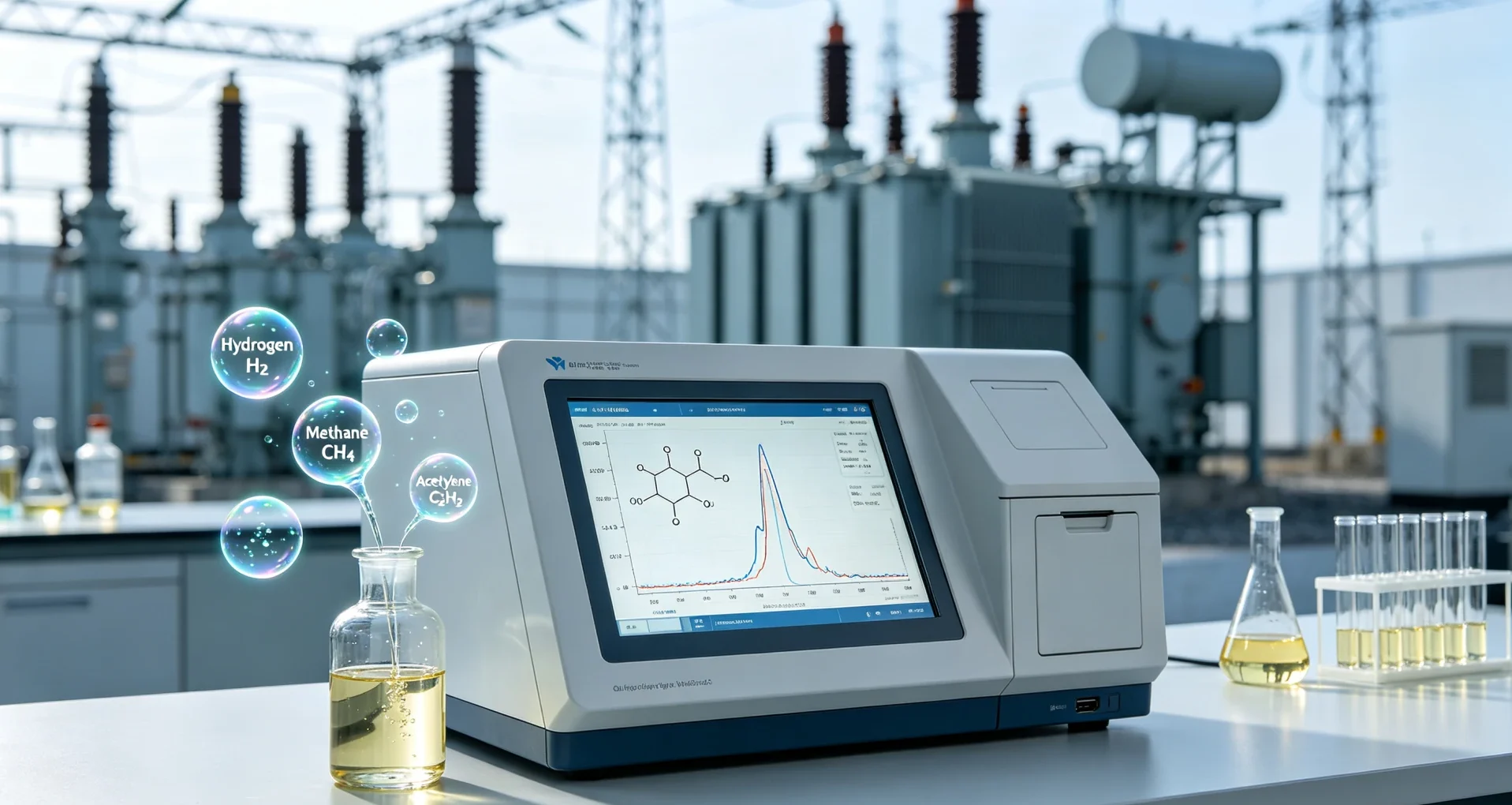
Introduction: Why Do DGA Gases Matter in Transformer Fault Diagnosis?
Dissolved Gas Analysis (DGA) is the primary predictive maintenance test for oil‑immersed power transformers. When thermal or electrical stress breaks down mineral oil and cellulose paper insulation, characteristic gases dissolve inside the oil. These DGA gases act as chemical markers of incipient faults long before visible damage or catastrophic failure occurs.
No single gas concentration alone can confirm a fault. Reliable diagnosis must combine gas concentration, gas generation rate, gas ratios, transformer operating history and complementary diagnostic tests. This guide explains what hydrogen, methane, acetylene and other transformer fault gases indicate, how to read gas patterns, and what actions maintenance and EPC teams should take after receiving DGA results.
What Are DGA Gases in Transformer Oil?
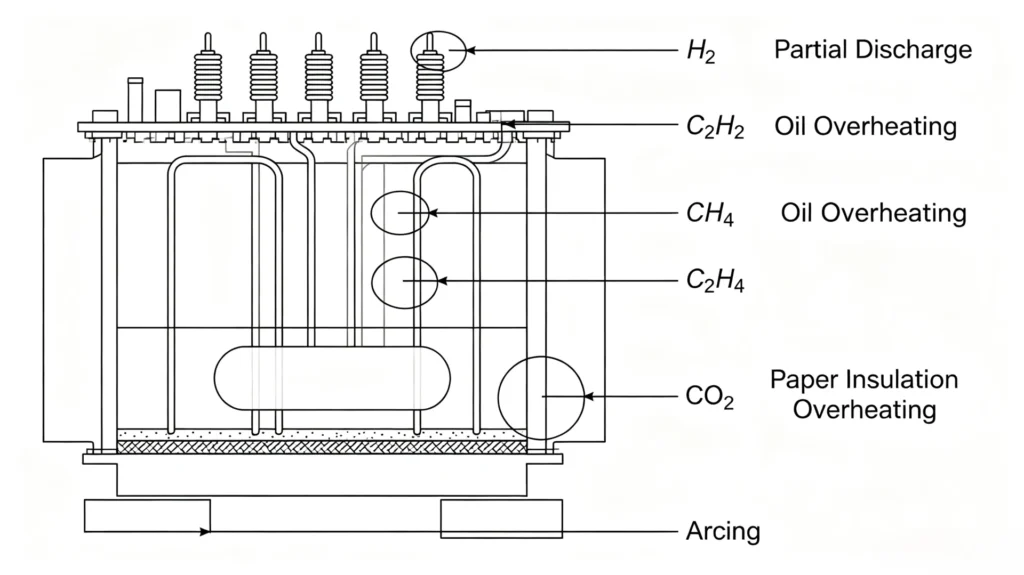
How Are Dissolved Gases Generated in a Transformer?
Gases form when insulating materials decompose under stress:
- Oil overheating breaks hydrocarbon chains in mineral oil.
- Paper/cellulose overheating releases carbon oxides from solid insulation.
- Partial discharge (PD): low‑energy electrical activity inside voids within insulation.
- Arcing: high‑energy electrical breakdown that rapidly decomposes oil.
- Electrical faults create extreme local temperature spikes and plasma.
Which Gases Are Typically Measured in DGA?
This table lists core DGA gases, chemical formula and primary fault associations, aligned with IEC 60599 and IEEE C57.104.
| DGA Gas | Formula | Typical Fault Association |
|---|---|---|
| Hydrogen | H₂ | Partial discharge / low‑energy electrical activity |
| Methane | CH₄ | Low‑temperature thermal faults |
| Ethane | C₂H₆ | Moderate thermal degradation |
| Ethylene | C₂H₄ | Higher‑temperature thermal faults |
| Acetylene | C₂H₂ | Arcing / high‑energy electrical faults |
| Carbon Monoxide | CO | Cellulose/paper insulation degradation |
| Carbon Dioxide | CO₂ | Cellulose insulation aging |
What Does Hydrogen in Transformer Oil Mean?
Why Is Hydrogen Produced in Transformer Oil?
Hydrogen forms from partial discharge, corona activity, low‑energy electrical discharge and certain mild thermal decomposition processes. It is the earliest gas released during many incipient electrical events.
What Does High Hydrogen in DGA Indicate?
Elevated hydrogen is often an early warning sign of electrical activity inside the transformer. A rising trend in H₂ is more significant than a single high reading. Operators must track sample‑to‑sample changes to separate stable background levels from active fault progression.
Does High Hydrogen Always Mean Partial Discharge?
No. Hydrogen is a critical diagnostic indicator but cannot be interpreted in isolation. Oil stray gassing, new transformer commissioning, and other thermal events can also create hydrogen. Cross‑check against other hydrocarbon gases before concluding PD exists.
What Does Methane in DGA Mean?
How Is Methane Generated in Transformer Oil?
Methane mainly comes from low‑temperature thermal decomposition of mineral oil. It may also appear alongside certain low‑energy discharge conditions.
What Can High Methane Levels Indicate?
High methane commonly signals low‑temperature overheating inside the transformer. It may also accompany electrical activity, so full gas pattern analysis is required.
How Should Methane Be Interpreted With Other DGA Gases?
CH₄ paired with H₂, C₂H₆ and C₂H₄ delivers far stronger diagnostic value than methane alone. The combination helps engineers separate mild thermal degradation from developing high‑temperature faults.
What Does Acetylene in Transformer Oil Mean?
Why Is Acetylene Important in DGA?
Acetylene forms only under very high‑energy conditions. It is one of the most heavily weighted gases for identifying dangerous electrical faults in oil transformers.
What Does High Acetylene in Transformer Oil Indicate?
High acetylene points to arcing and high‑energy electrical discharge. It signals severe, fast‑developing electrical faults that can quickly destroy transformer insulation.
Is Any Acetylene in Transformer Oil a Sign of Arcing?
Not necessarily. Trace acetylene can appear after factory testing, switching transients or minor events. Engineers must evaluate concentration, rate of rise, companion gases, transformer design and operational history.
Why Is a Rapid Increase in Acetylene More Concerning?
Sudden, fast‑rising acetylene is a red flag. A steep generation rate means active arcing is ongoing, and the transformer may require urgent inspection or removal from service.
What Does Ethane Mean in DGA?
What Does C₂H₆ Indicate?
Ethane signals lower‑temperature thermal degradation and mild oil overheating. It usually appears in early‑stage thermal fault sequences before ethylene develops.
How Is Ethane Different From Methane and Ethylene?
CH₄ marks low‑temperature heating; C₂H₆ shows moderate thermal breakdown; C₂H₄ develops at higher temperatures. Comparing these three hydrocarbons helps estimate fault temperature range.
What Does Ethylene Mean in Transformer Oil?
What Does High C₂H₄ Indicate?
High ethylene indicates higher‑temperature overheating and severe thermal stress within the transformer.
Why Is Ethylene Important for Thermal Fault Diagnosis?
Ethylene is the key marker for medium‑to‑high temperature thermal faults. It helps distinguish mild low‑temperature heating from hotspots that risk carbonisation of oil and solid insulation.
Ethylene vs. Ethane: What Is the Difference?
| Gas | Main Diagnostic Association |
|---|---|
| CH₄ | Lower‑temperature thermal activity |
| C₂H₆ | Moderate thermal degradation |
| C₂H₄ | Higher‑temperature overheating |
What Do Carbon Monoxide and Carbon Dioxide Mean?
What Does CO Mean in DGA?
Carbon monoxide comes from breakdown of cellulose paper insulation. Elevated CO signals paper overheating or accelerated solid insulation degradation.
What Does CO₂ Mean in DGA?
CO₂ is released during cellulose decomposition. It appears both from normal insulation ageing and abnormal thermal deterioration of paper.
Why Should CO and CO₂ Be Interpreted Together?
CO₂ naturally accumulates over decades of normal operation. Isolated CO₂ increases rarely represent a serious fault. Engineers evaluate CO and CO₂ ratios and trends to separate benign ageing from damaging paper overheating.
DGA Gases and Transformer Fault Types
The table below maps fault modes to typical gas signatures. This supports quick screening before formal ratio analysis.
| Transformer Fault | Typical DGA Gases |
|---|---|
| Partial Discharge | H₂, sometimes CH₄ |
| Low‑Temperature Thermal Fault | CH₄, C₂H₆ |
| High‑Temperature Thermal Fault | C₂H₄, CH₄ |
| Arcing | C₂H₂, H₂ |
| Paper/Cellulose Overheating | CO, CO₂ |
| Mixed Electrical/Thermal Fault | Multiple gases |
Which DGA Gas Indicates Partial Discharge?
Hydrogen (H₂) is the primary gas linked to partial discharge, often with small amounts of methane.
Which DGA Gas Indicates Overheating?
Methane, ethane and ethylene appear sequentially as fault temperature rises. Ethylene is the key marker for severe hotspots.
Which DGA Gas Indicates Arcing?
Acetylene (C₂H₂) is the signature gas for arcing, almost always accompanied by hydrogen.
Which DGA Gases Indicate Insulation Degradation?
Carbon monoxide (CO) and carbon dioxide (CO₂) show degradation of cellulose paper insulation.
Can You Diagnose a Transformer Fault From One DGA Gas?
No. DGA fault diagnosis should never rely on a single gas reading.
Why Gas Combinations Matter
Faults produce groups of gases, not one isolated gas. Gas patterns reduce false positives and help differentiate between thermal and electrical failure modes.
Why Gas Generation Rate Matters
A single high reading may be a one‑off anomaly. Continuously rising gas levels or rapid gas generation rate (ROG) proves active fault development and carries higher risk.
Why Transformer Operating Conditions Matter
Diagnosis must account for load cycles, oil temperature, transformer age, oil type, maintenance records and prior fault history. A gas level that is normal for an aged unit may be abnormal for a new transformer.
How to Interpret DGA Gas Patterns
Use this practical step‑by‑step workflow for DGA gas interpretation.
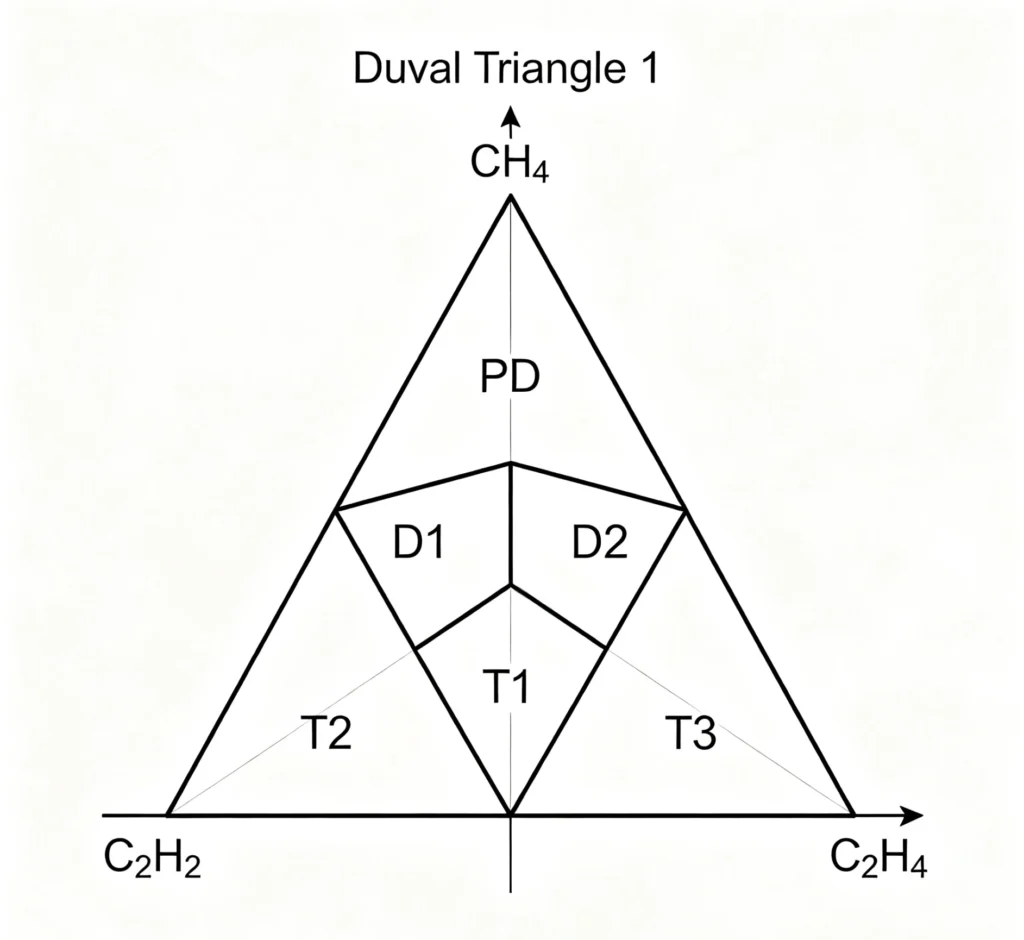
Step 1: Check Individual Gas Concentrations against standard threshold values.
Step 2: Compare gas levels with previous samples to calculate trends and gas generation rates.
Step 3: Identify the dominant DGA gases in the sample.
Step 4: Analyse gas ratios using accepted diagnostic frameworks.
Step 5: Apply DGA diagnostic methods: Duval Triangle, Key Gas Method, Rogers Ratio and IEC‑based interpretation.
Step 6: Confirm the suspected fault using additional electrical or oil tests.
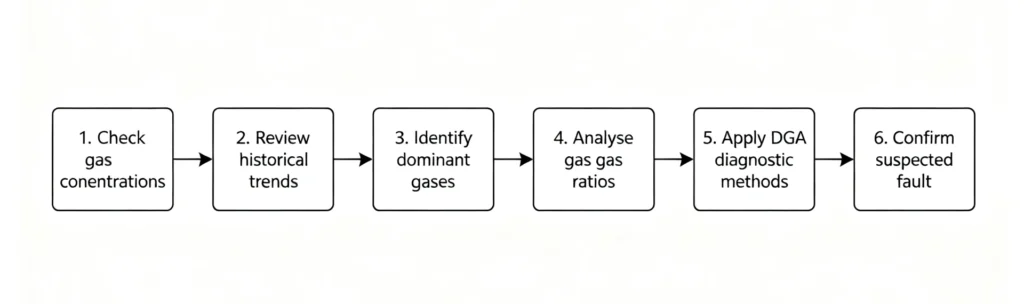
Important note: DGA is a screening and diagnostic tool, not standalone proof of a fault. Final root cause confirmation requires physical inspection or supplementary electrical testing.
DGA Gas Interpretation Example
These practical examples follow standard DGA interpretation logic and use cautious language to avoid absolute “gas = fault” statements.
Example 1 – High Hydrogen With Low Acetylene
High H₂ with minimal acetylene may indicate low‑energy electrical activity or partial discharge. Review historical trends and perform PD testing to confirm.
Example 2 – Increasing Methane and Ethane
Rising CH₄ and C₂H₆ suggest low‑to‑moderate thermal degradation. Monitor trends and check for hotspots in winding or core regions.
Example 3 – Increasing Ethylene
Rising C₂H₄ may indicate higher‑temperature thermal fault. Investigate possible overheating in metal joints, contacts or windings.
Example 4 – Increasing Acetylene
Rising acetylene can signal arcing or high‑energy discharge. Schedule urgent retesting and equipment inspection to avoid catastrophic failure.
Example 5 – Increasing CO and CO₂
Rising CO and CO₂ may point to cellulose insulation degradation. Compare CO/CO₂ ratios and check operating temperatures to separate normal ageing from abnormal paper damage.
When Should High DGA Gas Levels Trigger Further Investigation?
When a Gas Level Is High
Concentrations exceeding standard threshold limits require review and repeat sampling.
When Gas Concentration Is Rapidly Increasing
A fast gas generation rate is often more critical than absolute concentration, showing an active progressing fault.
When Acetylene Suddenly Appears
New detection of acetylene in previously clean oil warrants immediate attention.
When Multiple Fault Gases Increase Together
Simultaneous rise across several fault gases increases confidence that an active fault exists.
When DGA Results Conflict With Transformer Operating Conditions
Mismatch between DGA signatures and observed operational behaviour requires deeper investigation.
Recommended next steps: repeat DGA testing, deploy online DGA monitoring, collect fresh oil samples, perform electrical testing and carry out on‑site transformer inspection.
Laboratory DGA Testing vs. Online DGA Monitoring
When Is Laboratory DGA Testing Appropriate?
Periodic manual oil sampling and laboratory gas chromatography are ideal for routine scheduled maintenance, commissioning tests and follow‑up after alarms. Lab DGA delivers high‑precision snapshot measurements.
When Is Online DGA Monitoring More Useful?
Online DGA monitoring fits critical power transformers, remote substations and assets with known fault risk. It provides continuous condition monitoring and captures fast gas generation events that manual sampling can miss.
Can Online DGA Monitoring Track Gas Trends?
Yes. Online DGA systems perform continuous gas measurement, real‑time trend tracking, configurable alarm thresholds and early warning. Operators receive remote alerts before faults escalate, reducing unplanned outages.
Frequently Asked Questions About DGA Gases
What are the main DGA gases in transformer oil?
The primary measured gases are hydrogen, methane, ethane, ethylene, acetylene, carbon monoxide and carbon dioxide.
What does hydrogen indicate in transformer oil?
Hydrogen typically signals partial discharge or low‑energy electrical activity, though thermal processes can also produce H₂.
What does methane mean in DGA?
Methane is the main gas associated with low‑temperature thermal decomposition of mineral transformer oil.
What does acetylene mean in transformer oil?
Acetylene points to high‑energy discharge or arcing. Trace amounts may be harmless, but sudden increases require urgent review.
Which gas indicates transformer overheating?
Methane, ethane and ethylene indicate overheating; ethylene marks higher‑temperature hotspots.
Which DGA gas indicates arcing?
Acetylene (C₂H₂) is the signature gas for arcing in oil‑immersed transformers.
Does hydrogen in transformer oil always mean partial discharge?
No. Hydrogen can also form from stray oil gassing and mild thermal events. Gas pattern and trend analysis are required.
Is acetylene in transformer oil always a serious problem?
Not always. Small stable trace amounts may be acceptable, but sudden appearance or rapid rise is a serious warning.
Can DGA gases diagnose transformer faults?
DGA identifies fault signatures and trends. It cannot deliver a final diagnosis on its own; it must be combined with other tests and operational data.
How often should transformer oil be tested for DGA?
Testing frequency depends on transformer age, criticality, load profile and prior DGA history. Asset managers follow local utility specifications and IEC / IEEE guidelines.
Conclusion: Use DGA Gas Patterns for Early Transformer Fault Detection
DGA interpretation follows a clear sequence: evaluate gas concentration → analyse gas trend → assess gas combinations → apply diagnostic ratios → confirm suspected faults.
- Hydrogen relates to electrical activity and partial discharge.
- Methane and ethane indicate low‑to‑moderate thermal activity.
- Ethylene marks higher‑temperature thermal faults.
- Acetylene suggests possible high‑energy discharge or arcing.
- CO and CO₂ reflect the condition of cellulose paper insulation.
DGA is one of the most valuable tools for transformer asset managers, EPC contractors and utility maintenance teams. Timely detection of incipient faults prevents catastrophic failures and extends transformer service life.
CTA: Need Continuous Transformer DGA Monitoring? Explore our Transformer DGA Online Monitoring System for real‑time dissolved gas tracking, trend logging and remote early warning for critical oil‑immersed transformers.
References & Technical Sources
- IEC 60599:2022, Mineral oil‑filled electrical equipment in service – Guidance on the interpretation of dissolved and free gases analysis
- IEEE C57.104‑2019, IEEE Guide for the Interpretation of Gases Generated in Mineral Oil‑Immersed Transformers
- IEC 60567, Oil‑filled electrical equipment – Sampling of gases and analysis of free and dissolved gases
- CIGRE Technical Brochure 771, Dissolved Gas Analysis for Transformers
- ASTM D3612, Standard Test Method for Analysis of Gases Dissolved in Electrical Insulating Oil by Gas Chromatography
[…] monitoring is the continuous or periodic measurement of dissolved gases in transformer oil. It identifies developing faults at an early […]
[…] These gases are monitored because each one reflects a different internal process — electrical discharge, thermal stress, or insulation degradation. Their concentrations, combinations, and trends form the basis for DGA interpretation. For detailed explanations of what each gas indicates, see What Do DGA Gases Mean? […]
[…] For the meaning of individual gases, see What Do DGA Gases Mean? […]