
-
Leon Zhang sales consultant
-
Phone/WhatsApp/Wechat: +86 13655813266


Power Quality Monitor
Power quality monitors for continuous monitoring of harmonics, voltage events and supply quality at utility and industrial supply points.
Showing all 4 results
-
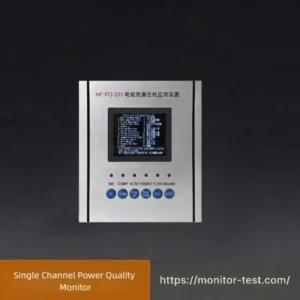
HF-PQ-201 Single Channel Power Quality Monitor
-
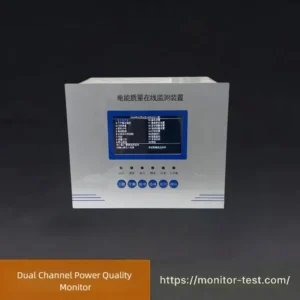
HF-PQ-202 Dual Channel Power Quality Monitor
-
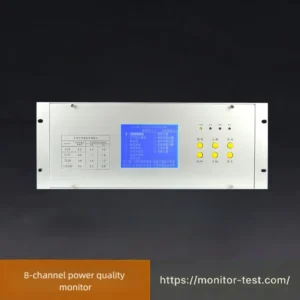
HF-PQ-203 8-channel power quality monitor
-
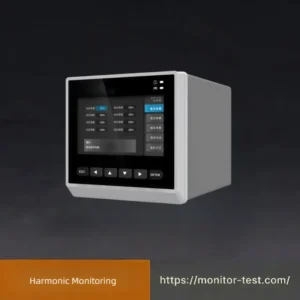
HF-PQ-206 Harmonic Monitoring
Which wall-mounted AC power quality monitor fits your panel?
These four units are installed permanently and record continuously, so the disturbance that happens at 03:00 on a Sunday is captured without anyone on site. They differ in how many feeders one unit can watch at once, and in how much of the parameter set is recorded and stored. Every figure on this page comes from the individual datasheets — open a model page for the full specification.
Two other pages help depending on where you are in the project: if the problem is not yet characterised and you still need a site survey, the portable side of the range is power quality analyzers; if you want the measurement background — what each parameter means, how it is calculated and how the standards treat it — read what an AC power quality monitor measures. This page is about choosing and ordering a unit.
The four models side by side
| Model | Feeders per unit | What it is built for | Reporting |
|---|---|---|---|
| HF-PQ-201 Single channel power quality monitor | 1 | Indoor single-feeder supervision. Rated −10 °C to +50 °C and up to 90 % RH without surface condensation. | Confirm on datasheet |
| HF-PQ-202 Dual channel power quality monitor | 2 | Two feeders on one unit. Frequency 45–55 Hz; voltage input AC 10–120 V or AC 10–400 V; current input 5 A / 1 A. | Confirm on datasheet |
| HF-PQ-203 8-channel power quality monitor | 8 | Multi-feeder panels. Voltage and current error ±0.1 %; frequency 42.5–57.5 Hz; records unbalance, flicker and voltage fluctuation. | Confirm on datasheet |
| HF-PQ-206 Harmonic monitoring | Harmonic supervision | Harmonic supervision with 60 over-limit event records. Voltage 5–450 V; current 0.06–6 A. | RS232 / RS485, Modbus and IEC 60870-5-103 |
Decide by feeder count before anything else
Feeder count is the number that decides the model. One eight-channel unit covers eight circuits in a single panel position; if a site has eight feeders, four dual-channel units do the same job but need four mounting positions and four sets of wiring and terminations. Count the circuits that must be watched at the same time, then pick the unit that covers them in one enclosure.
If the answer is one feeder and the requirement is harmonic supervision with an event record rather than a full multi-parameter record, HF-PQ-206 is the narrower, purpose-built option.
Decide by what has to end up on the record
Harmonics alone is the simplest requirement. Once you also need unbalance, flicker and voltage fluctuation stored alongside the voltage and current channels, the eight-channel HF-PQ-203 is the model that records those parameters at ±0.1 % voltage and current error.
The distinction matters in practice because an instrument that reports a single aggregate number per day cannot tell you whether a limit was exceeded for ten seconds or for six hours. Ask what interval is recorded, how long it is retained, and how over-limit events are counted — the answers differ by model and are stated per datasheet.
What the standards actually cover
Four references come up in almost every power quality specification, and they do different jobs:
- IEC 61000-4-30 — power quality measurement methods. It defines how each parameter is measured and establishes measurement classes, so two instruments of different classes are not directly comparable even when the parameter list looks identical.
- EN 50160 — the voltage characteristics a public electricity supply is expected to deliver, and therefore the benchmark most European supply-point studies are judged against.
- IEEE 519 — recommended practice for harmonic control, used mainly to set limits at the point of common coupling for industrial customers.
- IEC 61000-4-7 and IEC 61000-4-15 — the measurement methods behind harmonic/interharmonic analysis and the flickermeter respectively.
In procurement terms the practical consequence is this: ask for the declared measurement class and the aggregation interval in writing, then compare instruments on that basis rather than on the headline parameter list. Our datasheets state the measured parameters and accuracy for each model; where a protocol or a class is critical to your acceptance test, confirm it on the datasheet before ordering rather than assuming it carries across from another model.
Where permanent monitors are normally installed
- Low-voltage panels in substations, where the question is what the incoming supply actually delivers over a month rather than what it delivered during a five-minute visit.
- Industrial distribution boards feeding variable-speed drives, rectifiers and arc equipment, where harmonics and voltage fluctuation are generated on site.
- Photovoltaic and EV charging connections, where the operating profile changes through the day and the disturbance appears at times nobody is watching.
- Commercial and data-centre incomers, where the record is needed to settle a dispute with the supply authority or a tenant.
Before you place an order
- Sensors and wiring. A monitor is only as accurate as the current transformers feeding it. Confirm CT ratio, class and burden against the instrument's input before ordering, and confirm whether the CTs are already installed or need to be supplied.
- Panel space and environment. HF-PQ-201 is rated −10 °C to +50 °C at up to 90 % RH without surface condensation. If the panel sits in an unconditioned kiosk, that rating decides the model before any feature comparison does.
- Protocol. Modbus and IEC 60870-5-103 over RS232/RS485 are confirmed on HF-PQ-206. For the other models, confirm the protocol on the datasheet against your SCADA stack rather than assuming it is the same.
- Recording window. Match storage to the length of the study. A multi-week investigation that runs out of memory halfway through produces a report with a hole in it.
Questions buyers ask before specifying
Can these units measure harmonics?
Yes. HF-PQ-206 is dedicated to harmonic supervision and keeps 60 over-limit event records. HF-PQ-203 records harmonic parameters alongside its voltage and current channels at ±0.1 % error. The harmonic order covered on each model is stated on its datasheet.
Do they report to a SCADA system?
HF-PQ-206 supports Modbus and IEC 60870-5-103 over RS232 or RS485. Protocol support on the other models is stated on each datasheet — confirm it against your system before ordering.
Monitor or analyzer — which comes first?
A monitor stays in the panel and records continuously. An analyzer is carried to site and is the right starting point while the problem is still uncharacterised. In most projects the survey comes first, the permanent monitor follows once you know which feeder and which parameter matter.
What is the lead time?
Standard models ship in 7–15 working days. Configured or custom variants take 25–35 days. Lead time is confirmed per order against the configuration and quantity you need.
Where are the datasheets?
Each model page carries its own datasheet, and the full set is in the datasheets library.
Models in this category
- HF-PQ-201 single channel power quality monitor — one feeder, indoor panel mounting.
- HF-PQ-202 dual channel power quality monitor — two feeders on one unit.
- HF-PQ-203 eight-channel power quality monitor — eight circuits, unbalance and flicker recording.
- HF-PQ-206 harmonic monitoring unit — harmonic supervision with event records and SCADA reporting.
Send the model, the feeder count and the destination port in the quotation request, and our engineers reply with a technical proposal and quotation within 12 hours.