Leave your message

-
Leon Zhang sales consultant
-
Email: zxl635973785@gmail.com
-
Phone/WhatsApp/Wechat: +86 13655813266

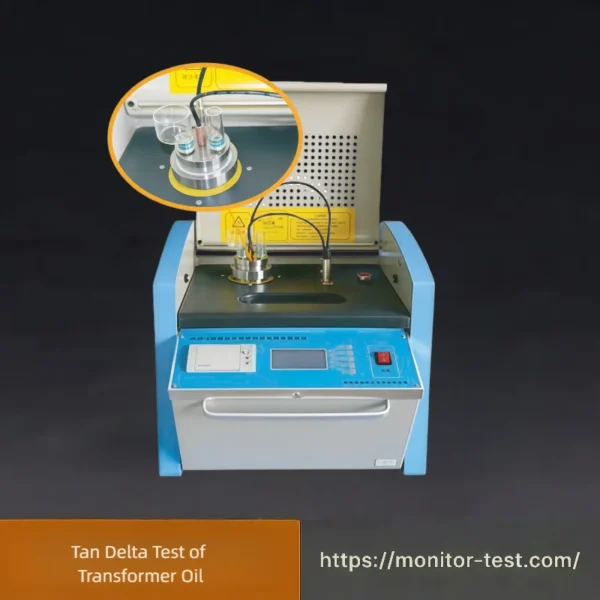
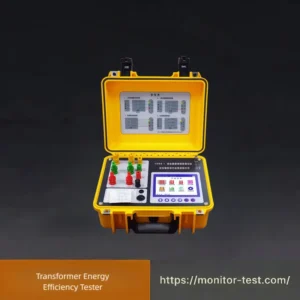
HF-TC-629 Tan Delta Test of Transformer Oil
The Tan Delta Test of Transformer Oil measures dielectric dissipation factor under AC voltage. It evaluates oil aging, moisture ingress and particulate contamination, ensuring safe insulation operation of power transformers.
Send your requirements, we will quote for you within 12 hours
The Tan Delta Test is a core insulating performance detection item for transformer mineral oil, also known as dielectric dissipation factor measurement. By applying alternating electric field to oil samples under controlled constant temperature, it calculates the tangent value of dielectric loss angle to quantify energy loss inside insulating oil.
This test effectively identifies oil moisture absorption, particulate contamination, oxidative aging and polar impurities. Combined with capacitance and DC resistivity detection, it comprehensively evaluates oil insulation condition, guides oil purification or replacement, and eliminates hidden dangers such as partial discharge and insulation breakdown inside power transformers to guarantee long-term safe operation of power equipment.
This test effectively identifies oil moisture absorption, particulate contamination, oxidative aging and polar impurities. Combined with capacitance and DC resistivity detection, it comprehensively evaluates oil insulation condition, guides oil purification or replacement, and eliminates hidden dangers such as partial discharge and insulation breakdown inside power transformers to guarantee long-term safe operation of power equipment.
Product Features
-
The oil cell adopts a three-electrode structure complying with GB/T 5654-2007 national standard, with 2mm inter-electrode spacing. It eliminates the impacts of stray capacitance and leakage current on dielectric loss test results. Equipped with an electromagnetic oil drain switch, it enables complete drainage of oil samples and inner flushing without dismounting the oil cell.
-
The instrument applies medium-frequency induction heating together with PID temperature control algorithm. This heating mode realizes non-contact heat transfer between the oil cell and heater, featuring uniform heating, fast temperature rise and easy adjustment. Temperature can be strictly stabilized within the tolerance range of preset values.
-
The built-in standard capacitor is an SF6 gas-filled three-terminal capacitor. Its dielectric loss and capacitance value remain unaffected by ambient temperature and humidity, sustaining high measurement precision during long-term operation.
-
The AC test power supply adopts AC-DC-AC conversion architecture, which effectively avoids test inaccuracies caused by fluctuations in mains voltage and frequency. The unit can operate stably even powered by generator electricity.
-
Comprehensive safety protection functions: the high voltage will be cut off rapidly with alarm prompts upon overvoltage, overcurrent or high-voltage short-circuit faults; alerts will be triggered if the temperature sensor fails or is disconnected. A temperature limiting relay is installed inside the medium-frequency induction heater to stop heating automatically once the temperature exceeds 120°C.
-
Flexible parameter configuration: temperature setting range: 0~125°C; AC voltage range: 500~2200V; DC voltage range: 0~500V.
-
Large backlit LCD screen delivers clear display and user-friendly human-machine interface. Following on-screen Chinese menu prompts to input commands, the instrument conducts automatic testing, and saves & prints test results autonomously.
-
Built-in real-time clock; test date and time can be stored, displayed and printed together with measurement data.
-
Empty electrode cell calibration function: it measures the capacitance and dielectric dissipation factor of the vacant cell to verify the cleanliness and assembly status of the electrode assembly. Calibration data is saved automatically to guarantee accurate calculation of relative permittivity and DC volume resistivity.
Technical Specifications
| Item | Parameter |
|---|---|
| Power Supply Voltage | AC 220V ±10% |
| Power Frequency | 50Hz/60Hz ±1% |
| Measuring Range | |
| Capacitance | 5pF ~ 200pF |
| Relative Permittivity | 1.000 ~ 30.000 |
| Dielectric Dissipation Factor (tanδ) | 0.00001 ~ 100 |
| DC Volume Resistivity | 2.5 MΩ·m ~ 20 TΩ·m |
| Measurement Accuracy | |
| Capacitance | ±(1% reading + 0.5pF) |
| Relative Permittivity | ±1% of reading |
| Dielectric Dissipation Factor | ±(1% reading + 0.0001) |
| DC Volume Resistivity | ±10% of reading |
| Resolution | |
| Capacitance | 0.01 pF |
| Relative Permittivity | 0.001 |
| Dielectric Dissipation Factor | 0.00001 |
| Temperature Measurement Range | 0 ~ 125°C |
| Temperature Measurement Error | ±0.5°C |
| AC Test Voltage | 500 ~ 2200V continuously adjustable, 50Hz |
| DC Test Voltage | 0 ~ 500V continuously adjustable |
| Power Consumption | 100W |
| Overall Dimensions | 500×360×420 mm |
| Total Weight | 22 Kg |
| Ambient Operating Temperature | 0°C ~ 40°C |
| Relative Humidity | Less than 75% |
Packing List – Transformer Oil Tan Delta Test Tester
|
No.
|
Item Description
|
Quantity
|
Remark
|
|---|---|---|---|
|
1
|
Main Tan Delta Test Instrument
|
1 Set
|
Full automatic testing system
|
|
2
|
Standard Three-electrode Oil Cell
|
1 Pc
|
2mm gap, comply with GB/T5654-2007
|
|
3
|
Power Cable
|
1 Pc
|
AC 220V power supply wire
|
|
4
|
High Voltage Test Wire
|
1 Set
|
Insulated connecting wire
|
|
5
|
Grounding Wire
|
1 Pc
|
For safety grounding protection
|
|
6
|
Printing Paper
|
2 Rolls
|
Thermal printer paper
|
|
7
|
User Manual
|
1 Copy
|
English version
|
|
8
|
Calibration Certificate
|
1 Copy
|
Factory test report
|
|
9
|
Tool & Cleaning Accessories
|
1 Set
|
Including cleaning cloth and fittings
|
Note: All accessories are standard configuration; customized accessories are available on request.
FAQ for Transformer Oil Tan Delta Test Tester
Q1: What is tan delta (dielectric dissipation factor) of transformer oil, and why test it?
A: Tan delta (tanδ) refers to the ratio of resistive leakage current to capacitive current in insulating oil under AC high voltage. It reflects the dielectric loss and insulation performance of transformer oil. Excessively high tan delta means large energy loss, serious heat generation, and degraded insulation. Regular testing effectively detects oil aging, moisture ingress, particle contamination, and chemical deterioration, preventing transformer insulation breakdown and equipment failure.
Q2: What is the working principle of the transformer oil tan delta tester?
A: The tester applies a standard AC high voltage to the oil test cell, accurately measures the phase difference and leakage current of the oil sample, and automatically calculates the tan delta value and volume resistivity. Modern integrated testers support automatic temperature control, calibration, data acquisition and calculation, meeting laboratory and on-site field test accuracy requirements.
Q3: What industry standards does the tester comply with?
A: It fully complies with mainstream international and national standards, including ASTM D924 (standard test method for dissipation factor of electrical insulating liquids) and GB/T 5654 (Chinese standard for dielectric loss factor and volume resistivity test of insulating oil), ensuring test data universality and authority.
Q4: What are the qualified tan delta ranges for new and in-service transformer oil?
A: The criteria are based on oil status and transformer voltage level (tested at standard temperature): 1. New oil: tan delta ≤ 0.1% (excellent insulation performance); 2. Normal in-service oil: 0.1%–0.2% (slight aging, regular monitoring); 3. Warning range: 0.2%–0.5% (moderate contamination/aging, increase test frequency); 4. Critical range: >0.5% (severe deterioration, oil filtration, regeneration or replacement is urgently required). For high-voltage transformers above 35kV, the measured tan delta shall not exceed 130% of the factory test value.
Q5: What pre-test preparations are required to ensure accurate results?
A: Key preparations include: 1. Instrument preparation: Ground the tester firmly, check wiring integrity, and perform empty cell calibration to eliminate baseline errors caused by residual moisture or film deposits on the test cell wall; 2. Test cell cleaning: Rinse the test cell at least 3 times with the tested oil sample to avoid cross-contamination from residual old oil or impurities; 3. Sample standing: Let the oil sample stand to eliminate internal bubbles, as bubbles will cause sharp fluctuations in test data; 4. Temperature stabilization: Control the test temperature to the standard 90℃ (uniform test temperature ensures data comparability).
Q6: Why does test temperature greatly affect tan delta results?
A: Transformer oil tan delta is highly temperature-dependent. Higher oil temperature will significantly increase molecular thermal motion and leakage current, leading to a higher tan delta reading. To ensure data consistency and comparability with historical data and standard values, all tests must be performed at a fixed standard temperature, and temperature compensation calibration is required for non-standard temperature test data.
Q7: What is the standard test frequency for transformer oil?
A: Classified by transformer capacity and operating status: 1. Large power transformers (>10MVA): Annual routine test; additional testing after overload operation, short-circuit fault or equipment maintenance; 2. Distribution transformers (1–10MVA): Test every 2–3 years; 3. Abnormal oil status: Test every 3 months after entering the warning range until the oil quality recovers.
Q8: Why is the tested tan delta value abnormally high?
A: Common causes and solutions: 1. Oil sample problems: Oil absorbs moisture, mixed with dust, metal particles or acidic substances caused by aging → Perform oil purification, degassing or replacement; 2. Test cell pollution: Unclean test cell with residual impurities → Repeatedly clean and calibrate the empty cell; 3. Operation errors: Unremoved bubbles in oil sample, insufficient temperature stabilization → Let the sample stand fully and test after constant temperature; 4. Instrument failure: Grounding failure, inaccurate temperature control → Check grounding wiring and calibrate the temperature system.
Q9: Why do repeated tests show inconsistent data?
A: Main reasons include incomplete bubble elimination in the oil sample, unclean test cell, unstable ambient temperature and humidity, poor instrument grounding contact, or insufficient preheating of the instrument. It is recommended to complete sample standing, cell cleaning and instrument preheating before the test, and keep the test environment stable.
Q10: How to clean and maintain the test cell daily?
A: Daily maintenance specifications: 1. Routine cleaning: Rinse the test cell 2–3 times with the corresponding oil sample before each test; clean with professional solvent when testing different types of insulating oil; 2. Residue removal: For long-used test cells with film deposits, use anhydrous ethanol for deep cleaning and dry completely; 3. Daily storage: Fill the cleaned test cell with clean qualified insulating oil for protection when not in use for a long time, to avoid dust and moisture adsorption on the electrode surface.
Q11: What are the storage and environmental requirements for the tester?
A: 1. Storage environment: Dry, ventilated, dust-free room, ambient temperature 0℃–40℃, avoid high temperature, humidity and direct sunlight; 2. Prohibited placement: Do not store in corrosive gas, vibration and strong electromagnetic interference environment; 3. Long-term storage: Cut off the power supply, clean the test cell and store with protective oil, cover the equipment dust cover, and power on for 30 minutes regularly every 3 months for maintenance.
Reviews
There are no reviews yet.