Leave your message

-
Leon Zhang sales consultant
-
Phone/WhatsApp/Wechat: +86 13655813266

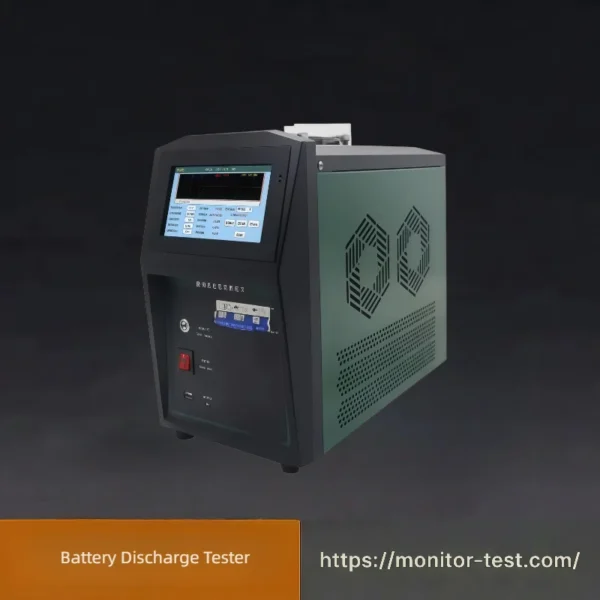
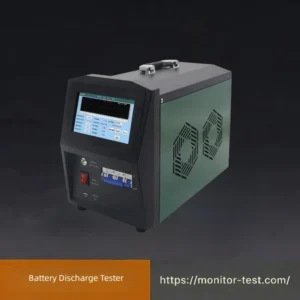
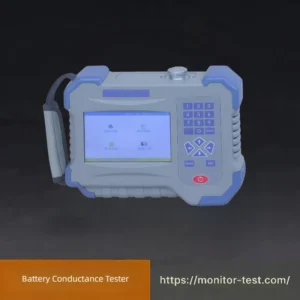
HF-BT-405 Battery Discharge Tester
This battery discharge tester adopts constant current discharge mode to accurately detect the actual capacity of lead-acid batteries. It supports automatic stop, real-time data tracking and multiple safety protections. Test data can be exported via USB for report generation, widely used in UPS, telecom and energy storage system maintenance.
One-year warranty on exported units
Payment terms agreed per order
Lead time confirmed per order
Send your requirements, we will quote for you within 12 hours
Overview
The Battery Discharge Tester adopts constant-current discharge technology to evaluate the real capacity of storage batteries. It tracks key parameters including voltage, current, discharge time and accumulated capacity, applicable to battery activation, maintenance test and performance inspection. Featuring convenient operation and reliable discharge safety, this equipment serves routine battery testing work for rail transit, hydropower stations, communication base stations and UPS computer rooms.
Functional Features
| Feature Name | Description |
|---|---|
| Comprehensive Safety Protections | Built-in overcurrent, short-circuit, overtemperature and reverse polarity protection to ensure full-process operation safety. |
| Multiple Alarm Functions | Real-time alarms and automatic discharge halt for overvoltage, undervoltage, out-of-range current, fan faults and other anomalies, protecting the tester and connected equipment. |
| Intelligent Operation Design | Equipped with quick-connect terminals for easy wiring. The entire test process supports automatic data recording and intelligent analysis, no manual intervention required. |
| Parallel Operation Support | Multiple units can be operated in parallel to meet discharge current requirements above 300A. |
| Rapid Capacity Evaluation | Estimate the residual capacity of the battery through a 3–5 minute quick discharge test. |
| Polymer PTC Load Resistance | Features low power consumption, excellent anti-surge performance, inherent overcurrent self-protection, and eliminates overheating red-hot risks for high safety. |
| High-Performance STMicroelectronics ARM CPU Main Control Board | Adopts dual-CPU redundant master-slave architecture for stable performance and rich functions. The master CPU handles instruction operation and calculation, while the slave CPU is responsible for alarm monitoring and process control. It ensures testing safety and reliability through dual-lock output and fault backup. |
| Presettable Discharge Parameters | Built-in universal discharge templates for various battery types. Templates are retained after power failure, enabling immediate testing upon startup without repeated parameter setting. |
| Professional Supporting Analysis Software | Simultaneously displays voltage & current curves, single-cell battery bar charts and data tables. Automatically generates test reports in Excel/Word formats, supporting data export and printing. |
Packing List
| Item No. | Description | Qty | Unit | Remarks |
|---|---|---|---|---|
| 1 | Battery Discharge Tester Main Unit | 1 | Set | |
| 2 | High-current Discharge Connecting Cables | 2 | Pcs | Positive & negative |
| 3 | Voltage Sampling Wires | 1 Set | Set | |
| 4 | Communication Data Cable (USB) | 1 | Pc | For data export |
| 5 | Power Cord | 1 | Pc | |
| 6 | Operation Manual (English & Chinese) | 1 | Copy | |
| 7 | Certificate of Calibration / Factory Test Report | 1 | Copy | Optional |
| 8 | Packing Box & Foam Protector | 1 | Set | Export wooden case optional |
Specification Checklist Before You Order
A discharge test is defined by the battery string, not by the instrument. These are the points that decide the configuration — and what a site survey should record.
| Item to confirm | Why it changes the configuration |
|---|---|
| Battery chemistry | Flooded lead-acid, VRLA/AGM, Ni-Cd and lithium strings each have their own end-of-discharge rule, so the cut-off is set from the chemistry rather than from a fixed number. |
| Nominal string voltage | 48 V, 110 V, 220 V, 400 V and 600 V DC systems need different input ranges and different cable sets. |
| Required discharge current | The current follows the capacity and the test duration you want; a 10-hour rate and a 1-hour rate on the same string ask very different things of the load bank. |
| Whether cells are monitored individually | String voltage hides a single weak block. Monitoring every cell changes the channel count and the wiring on site. |
| Discharge mode | Constant current, constant power and constant resistance produce different curves and different test durations for the same string. |
| Purpose of the test | Capacity verification, commissioning acceptance and periodic maintenance each imply a different report and a different re-test interval. |
| Where the data has to go | On-board storage, USB export, or a record that feeds your battery-management system — this decides the software scope. |
| Room ventilation and AC supply | Discharge energy leaves the set as heat. The ventilation available in the battery room limits how fast a large string can be discharged. |
Send us the answers with the equipment list or single-line diagram, and the configuration can be fixed without a second site visit.
Related Systems
- Battery internal resistance tester — measures ohmic resistance per cell — the check that normally comes before a full discharge test.
- Lithium battery charge-discharge tester — adds a controlled charge cycle for lithium packs.
- Lithium battery pack discharge tester — pack-level discharge for modules rather than stationary strings.
FAQ – Battery Discharge Tester
Q1: What is a Battery Discharge Tester?
A: It is professional test equipment to perform constant-current discharge testing on lead-acid, lithium and other batteries. It verifies actual capacity, detects bad cells and evaluates battery health under real load conditions.
Q2: What battery types can this tester work with?
A: Suitable for lead-acid batteries (VRLA, flooded), lithium iron phosphate batteries, nickel-cadmium batteries. Common voltage ranges: 12V, 24V, 48V, 110V, 220V battery packs.
Q3: What is the main purpose of discharge testing?
A: Measure real usable capacity; identify aging, underperforming single cells; check battery consistency; validate battery performance after maintenance; provide data for replacement decision.
Q4: What discharge modes are supported?
A: Constant current discharge (standard), constant power discharge, constant resistance discharge. Most models support automatic stop by capacity, voltage, time or temperature threshold.
Q5: How to set the discharge current?
A: Follow battery specifications. General rule: 0.1C recommended for standard capacity test; avoid discharge current exceeding maximum allowable discharge current to prevent overheating.
Q6: What safety protection functions does the tester have?
A: Over-temperature protection, over-current protection, battery reverse connection protection, over-discharge low voltage cutoff, fan failure alarm, abnormal stop and data auto-save.
Q7: Can I test a single battery cell or only whole battery bank?
A: Most models test whole battery strings. Optional cell voltage monitoring module can track each single cell voltage during discharge to find weak cells.
Q8: Will discharge testing damage the battery?
A: Standard-compliant discharge test will not damage healthy batteries. Do NOT discharge below battery manufacturer’s cut-off voltage; deep over-discharge will shorten service life.
Q9: Does the tester record test data?
A: Yes. It records voltage, current, temperature, cumulative capacity and test duration. Data can be exported via USB to PC for report generation and archiving.
Q10: What environment is required for testing?
A: Ventilated room, ambient temperature 0–40°C. Keep away from flammable gas from lead-acid batteries. Do not cover the cooling vents of the tester.
Reviews
There are no reviews yet.