Leave your message

-
Leon Zhang sales consultant
-
Email: zxl635973785@gmail.com
-
Phone/WhatsApp/Wechat: +86 13655813266

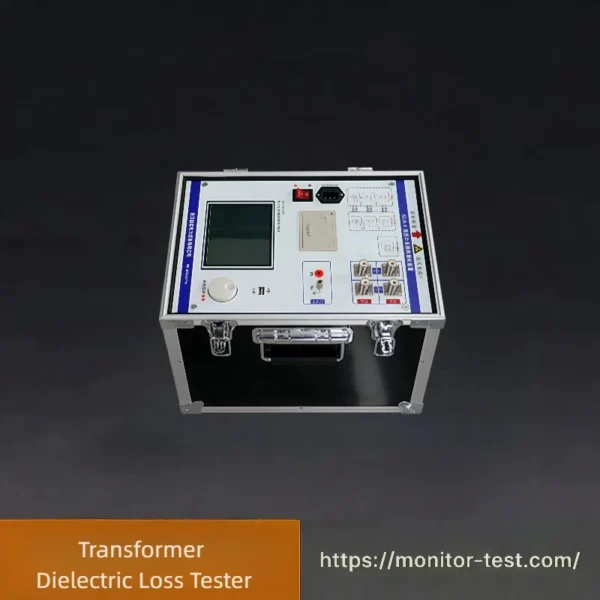
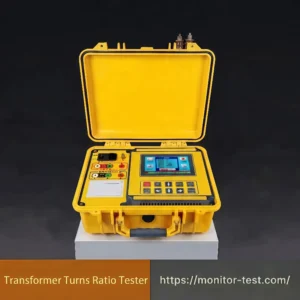
HF-TC-603 Transformer Dielectric Loss Tester
This Transformer Dielectric Loss Tester outputs adjustable AC high voltage to measure tan delta and capacitance, identifying insulation dampness, aging and contamination for transformers and HV bushings with strong field anti-interference performance.
Send your requirements, we will quote for you within 12 hours
Overview
Equipped with the Transformer Dielectric Loss Tester, dielectric loss insulation testing effectively detects insulation dampness, aging and defects, widely used in equipment manufacturing, commissioning and preventive maintenance tests.
The HF-TC-603 Fully Automatic Anti-Interference Dielectric Loss Tester adopts variable frequency power supply technology. It uses single-chip microcomputer and electronic technology to realize automatic frequency conversion, analog-to-digital conversion and data calculation, featuring strong anti-interference capability, fast testing speed, high precision and simple operation.
Its variable frequency power supply adopts high-power switching power supply, outputting pure sine waves including single frequency range of 45Hz~65Hz and dual frequency groups: 47.5Hz/52.5Hz, 45.0Hz/55.0Hz, 57.5Hz/62.5Hz, 55.0Hz/65.0Hz. It supports automatic voltage boosting with a maximum output voltage of 10kV. The instrument automatically filters out 50Hz interference, making it suitable for on-site testing at substations and other sites with severe electromagnetic interference.
Performance Features
- Supports self-excited testing for CVT. Complete one-time wiring to simultaneously measure capacitance and tanδ of C1 and C2.
- Equipped with reverse wiring low-voltage shielding and high-voltage shielding functions. When the CVT busbar is grounded, it can perform 10kV reverse-wiring dielectric loss measurement on C11 without removing connecting wires.
- Comes with external applied voltage measurement and external standard capacitor (CN) measurement functions.
- Multi-channel synchronous measurement function, capable of testing dielectric loss values of four test objects at the same time.
- Adopts variable frequency technology to eliminate on-site 50Hz power frequency interference, delivering reliable test data even under severe electromagnetic interference conditions.
- Built-in overcurrent protection to prevent instrument damage when the test sample suffers short circuit or breakdown.
- Grounding interlock protection: the instrument will not start operation if grounding is poor or missing.
- Integrated built-in standard capacitor and high-voltage power supply, simplifying field testing and reducing on-site wiring work.
- Equipped with an extra-large LCD screen for easy operation; Chinese menu prompts guide users throughout the whole testing process.
- Corresponding wiring diagrams are displayed under each function interface inside the unit, greatly facilitating wiring operations for operators.
- Supports Chinese / English language switching.
Technical Specifications
| No. | Item | Parameter | Details |
|---|---|---|---|
| 1 | Operating Conditions | Ambient Temperature: -15℃ ~ 40℃ | Relative Humidity RH < 80% |
| 2 | Anti-interference Principle | Variable Frequency Method | — |
| 3 | Power Supply | AC 220V±10% | Compatible with generator power supply |
| 4 | High Voltage Output | Output Range: 0.5kV ~ 10kV, step 0.1kV Accuracy: 2% Max Current: 200mA Capacity: 2000VA |
— |
| 5 | Self-Excitation Power Supply | AC 0V~50V / 40A | Single frequency: adjustable freely from 45.0Hz to 65.0Hz Dual frequency options: 45.0Hz/55.0Hz 47.5Hz/52.5Hz 55.0Hz/65.0Hz 57.5Hz/62.5Hz |
| 6 | Resolution | tanδ: 0.001% | Cx: 0.001pF |
| 7 | Measurement Accuracy | Δtanδ: ±(1.0% of reading + 0.040%) ΔCx: ±(1.0% of reading + 1.00pF) |
— |
| 8 | Measuring Range | tanδ | No upper limit |
| Cx General Range | 15pF < Cx < 300nF | ||
| Cx @10kV | Total Cx = Cx1+Cx2+Cx3+Cx4 < 60nF | ||
| Cx @5kV | Total Cx = Cx1+Cx2+Cx3+Cx4 < 150nF | ||
| Cx @1kV | Total Cx = Cx1+Cx2+Cx3+Cx4 < 300nF | ||
| CVT Test Mode | Total Cx = Cx1+Cx2+Cx3+Cx4 < 300nF | ||
| 9 | Overall Dimensions | Main Unit (mm): 400×290×330 Accessory Case (mm): 450×330×150 |
— |
| 10 | Storage Capacity | Stores up to 200 test records, supports USB flash disk data export | — |
| 11 | Weight | Main Unit: 25.75kg Full Accessory Case: 33.44kg |
— |
Applications of Fully Automatic Anti-Interference Dielectric Loss Tester
This tester accurately measures the dielectric dissipation factor (tanδ) and equivalent capacitance (Cx) of various high-voltage power equipment to inspect insulation performance, applicable to transformers, instrument transformers, bushings, capacitors and other apparatus.
It adapts to power plants and substations with intense electromagnetic interference, capable of stable testing under 200% power frequency interference, and serves as a replacement for traditional manual Schering bridges.
It is widely used for preventive tests of in-service power equipment and handover acceptance tests of newly installed devices. Longitudinal comparison of test data helps locate hidden insulation defects including moisture absorption and aging.
It supports dielectric loss measurement of Capacitive Voltage Transformers (CVT) without wire removal, and can also conduct characteristic research on insulating materials in laboratories and scientific research environments.
Why Choose Us
1. Professional Supplier & Direct Source Supply
We are a professional supplier of high-voltage power test instruments, working with qualified partner factories. All products are sourced from qualified partner factories and fully calibrated and tested before delivery. No middleman, stable quality, competitive pricing and sufficient supply capacity for bulk orders.
2. Stable Anti-interference & High-precision Performance
Our dielectric loss tester adopts advanced frequency conversion anti-interference technology, which can work stably under strong electromagnetic interference in substations and power plants. The test data is accurate, repeatable and fully compliant with national and international power test standards.
3. Complete Functions for Full-scenario Testing
Integrated with CVT self-excited testing, no disassembly and no rewiring required. It supports transformers, bushings, CT, CVT, capacitors and cable insulation testing. Multiple test modes meet laboratory, factory and on-site substation test requirements.
4. Strict Quality Control & High Durability
Every instrument undergoes strict aging testing, calibration and inspection before delivery. With shockproof structure and industrial-grade design, the equipment adapts to long-distance transportation and harsh outdoor working environments.
5. Comprehensive Safety Protection Design
Equipped with grounding detection, high-voltage overcurrent protection, short-circuit protection and misoperation alarm functions. The instrument ensures safe operation for field engineers and effectively avoids equipment damage.
6. Customization & OEM/ODM Service
We support customized voltage grades, software functions, language versions and appearance logos. Flexible OEM and ODM services meet different market and customer demands.
7. Reliable After-sales & Global Technical Support
We provide professional operation guidance, technical training, remote support and long-term after-sales service. All products come with complete accessories, user manuals and factory calibration reports.
FAQ
Q1: What is a Transformer Dielectric Loss Tester?
A: Also called tan delta tester or dissipation factor tester, it applies AC high voltage to measure tan δ (dielectric loss factor) and capacitance of transformer insulation, evaluating winding insulation, bushings, and transformer oil aging, moisture ingress, contamination, or partial deterioration per IEC 60247 & IEEE C57.152 standards.
Q2: What transformer components can it test?
A: Power transformer windings, HV/LV bushings, tap changers, CVT, PT, transformer insulating oil, and other high-voltage capacitive equipment. It supports single-phase, three-phase transformer winding measurement via UST/GST/anti-interference shielding modes.
Q3: What’s the difference between dielectric loss tester and insulation resistance tester (Megger)?
A: Megger uses DC voltage to judge overall insulation resistance. Dielectric loss tester uses AC voltage to detect subtle aging, micro-moisture and chemical contamination that DC tests cannot identify, which is critical for long-term transformer trending diagnosis.
Q4: What are standard acceptable tan delta thresholds for transformers?
- New transformer (<230kV): tan δ ≤ 0.5%
- In-service healthy unit: 0.3% ~ 0.8%
- Warning range: 0.8% ~ 1.0% (insulation aging, re-test within 3 months)
- Critical fault: >1.0% (moisture, severe contamination, overhaul required).For new transformer oil at 25°C: tan δ ≤ 0.1%.
Q5: Why temperature heavily affects tan delta readings?
A: Insulation dielectric loss rises exponentially with temperature. Always record transformer winding/oil temperature during testing and apply standard temperature correction factors (20°C reference). Comparing raw data at different temperatures will lead to wrong fault judgements.
Q6: How often should dielectric loss tests be carried out on transformers?
- Factory acceptance & site commissioning (mandatory)
- Routine maintenance: Annual test for high-voltage main transformers; biennial for distribution transformers
- Extra tests after overhaul, oil replacement, transportation, abnormal operation or lightning strike faults.
Q7: Can the tester work outdoors under high humidity or rainy weather?
A: Portable models support field use, but RH>80% will cause surface leakage on bushings/terminals and generate falsely high tan delta values. Dry and clean test terminals with hot air blower, add shielding rings and avoid direct rain exposure during testing.
Q8: What’s UST and GST test mode? When to use each?
- UST (Ungrounded Specimen Test): Test transformer windings with neutral point isolated, high anti-interference, primary mode for transformer winding test.
- GST (Grounded Specimen Test): For fully grounded equipment like bushings, CVT and oil test cells.All our testers switch modes automatically with one click.
Q9: Why wait 30–60 seconds after boosting voltage before recording data?
A: Transformer insulation produces absorption current instantly after voltage application, causing temporary high loss readings. Stable readings only appear after 30–60s stabilization to ensure accurate trending data.
Q10: How to avoid negative dielectric loss values on site?
A: Negative tan delta mainly comes from stray capacitance interference, poor grounding or incorrect wiring for CVT/PT. Solutions:
- Scrape rust/paint on grounding points for zero-resistance earth connection
- Suspend unused HV leads in air, avoid contact with ground/metal frames
- Adopt self-excitation method for CVT measurement instead of direct GST mode.
Q11: What anti-interference design does the tester adopt for substation live environments?
A: Built-in full-shield measurement circuit, digital filtering, phase-locked tracking and cross-interference suppression algorithm. It stably measures under strong 50/60Hz electromagnetic interference in running substations without shielding tents.
Q12: What test voltage levels do your testers support?
A: Standard models output 0.5kV / 1kV / 2kV / 5kV AC adjustable, matching all distribution and EHV transformer field test requirements. Custom 10kV high-output versions are available for lab acceptance testing.
Q13: Does the tester store test data and support report export?
A: Yes. Internal storage saves hundreds of test records (transformer ID, temperature, tan δ, capacitance, test time). Data can be exported via USB to generate standardized PDF test reports for power grid filing.
Reviews
There are no reviews yet.