
Padmount Transformer: 6 Specs and Site Checks
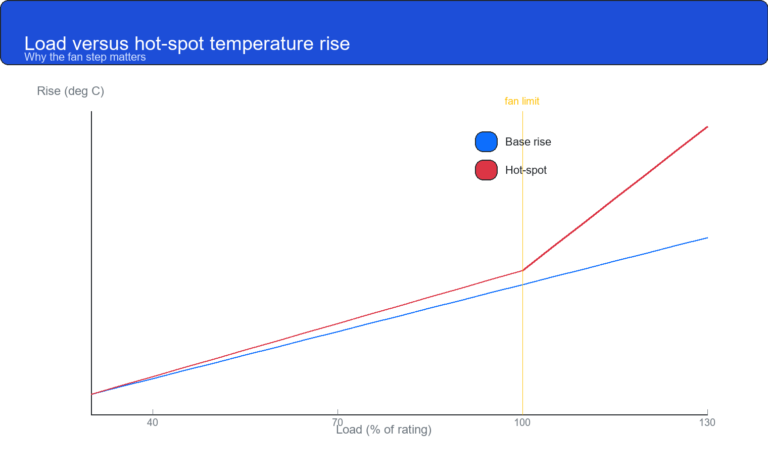
A padmount transformer steps utility voltage down to the plant level behind a dead-front door; the cooling class and the commissioning tests set the build.

Blog
A padmount transformer steps utility voltage down to the plant level behind a dead-front door; the cooling class and the commissioning tests set the build.
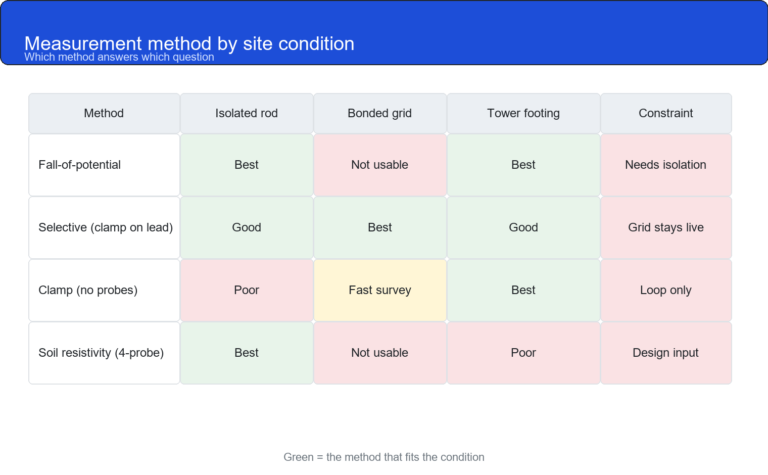
Compare fall-of-potential, clamp and soil resistivity methods before you choose an earth resistance meter, then match the range to the site.
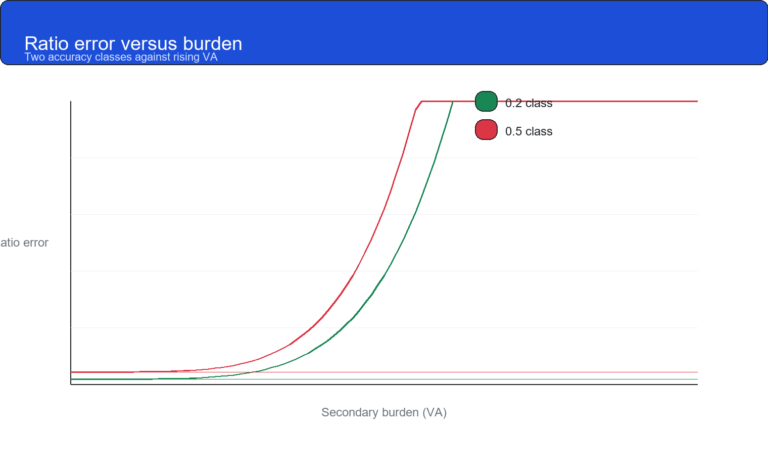
Current transformer design holds its class only when burden and knee point match the load; verify ratio and excitation behavior before dispatch.
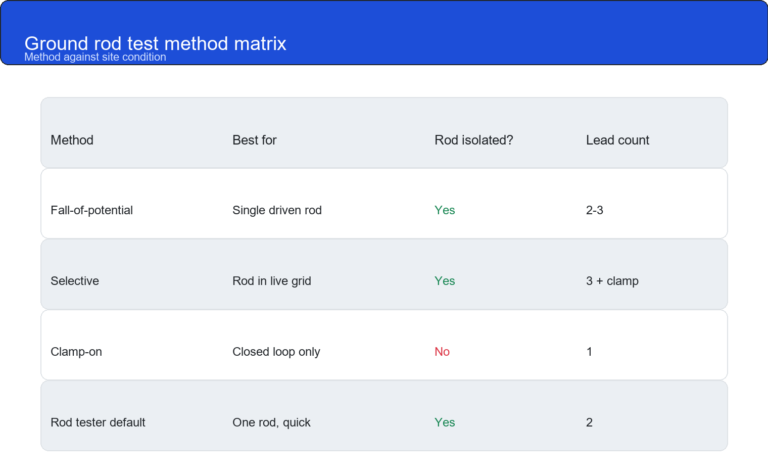
A ground rod tester proves the bond only when the rod meets the earthing limit; test at the site and log the reading against the season.
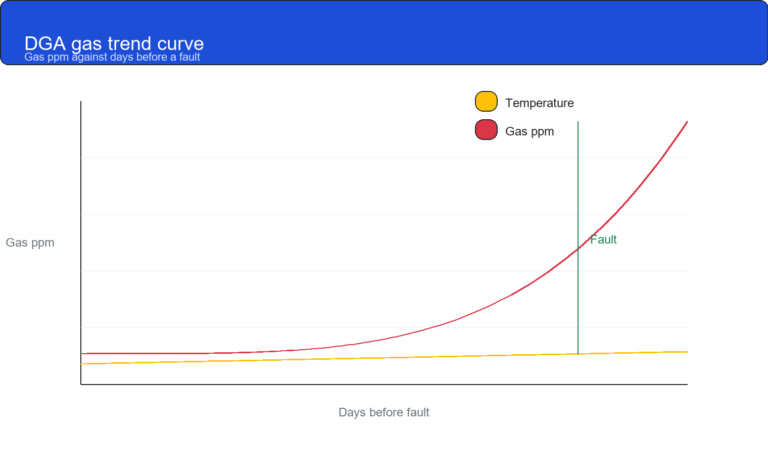
A transformer monitor turns dissolved-gas, temperature and partial-discharge signals into one early-warning view; match the channels and link to the unit.
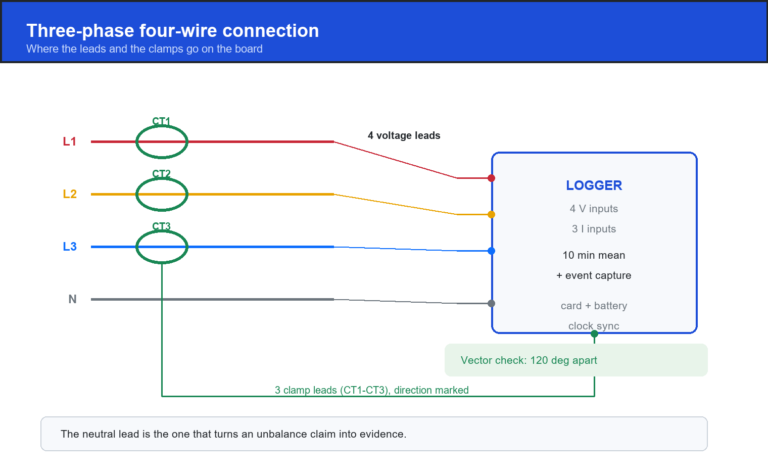
A power logger stays on the circuit for weeks so the one bad minute is recorded. Compare the interval, storage and class before you wire it.
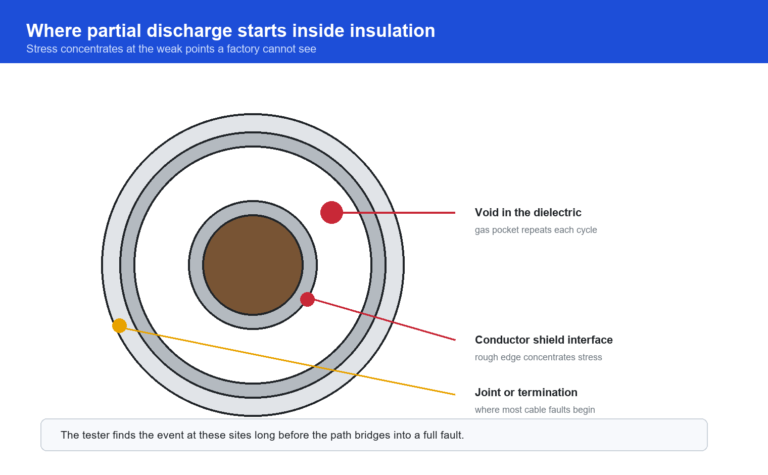
Compare partial discharge tester sensor types, bandwidth and sensitivity specs, then plan a repeatable field setup for switchgear and cable checks.
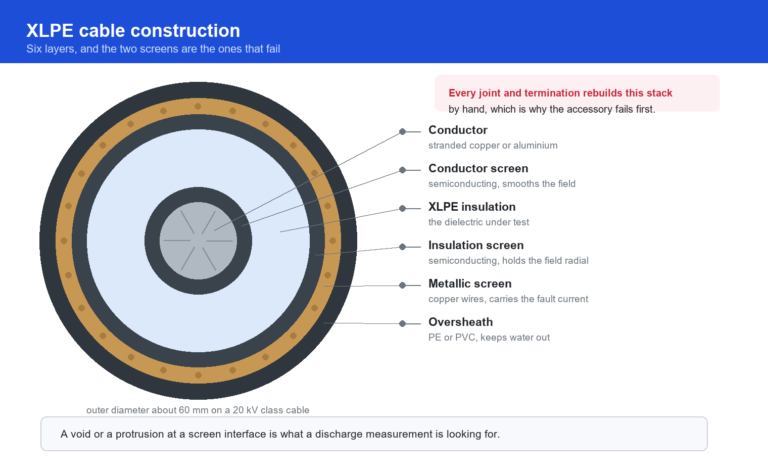
What high voltage cable testing proves, and what it cannot: a field procedure, the tan delta and discharge readings, and the interval that follows.
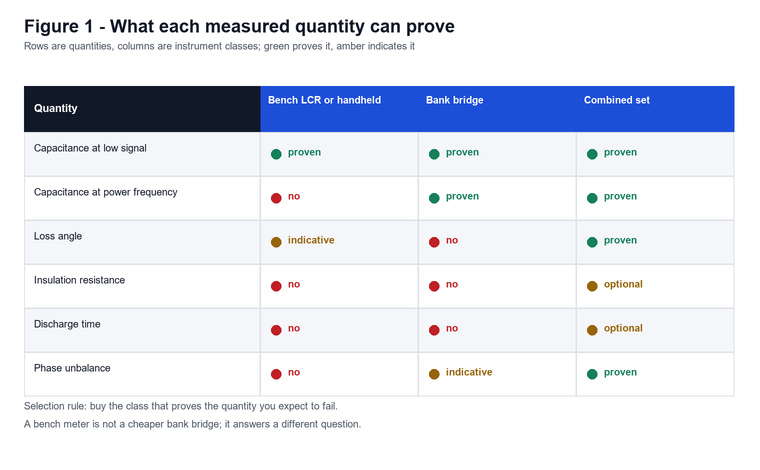
Match the instrument to the bank: capacitor tester classes, range and accuracy limits, discharge rules and the deviation bands that decide a unit's fate.
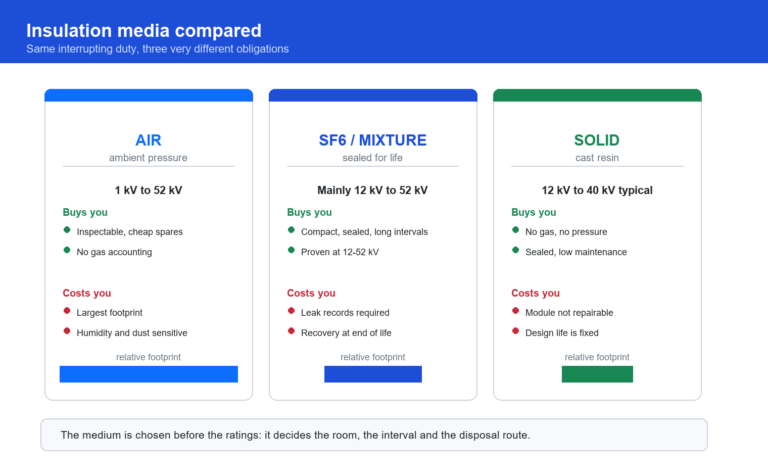
What high voltage switchgear has to prove, and what a field pass cannot: the ratings to read, the tests that matter and the trend that sets the next date.