Leave your message

-
Leon Zhang sales consultant
-
Email: zxl635973785@gmail.com
-
Phone/WhatsApp/Wechat: +86 13655813266

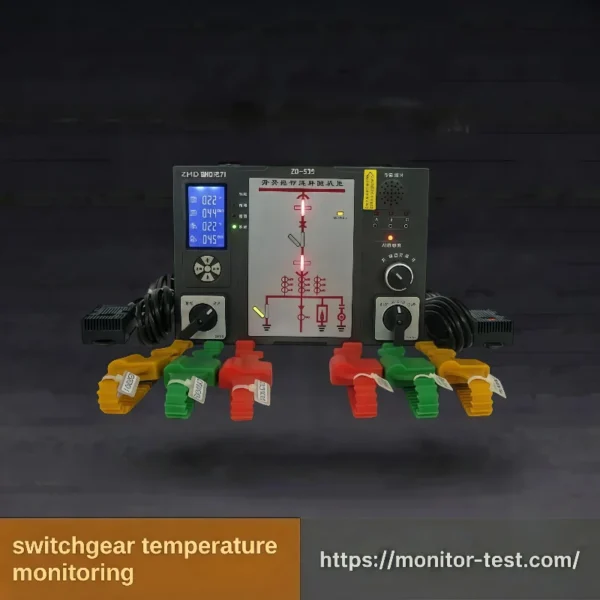
HF-W-702 Switchgear Temperature Monitoring
Switchgear Temperature Monitoring adopts passive wireless sensors to continuously monitor the temperature of busbars, contacts and cable joints inside switchgears. It triggers timely overheat alarms to eliminate hidden dangers and ensure the safe and stable operation of power distribution equipment.
Send your requirements, we will quote for you within 12 hours
Wireless Temperature Monitoring System for Power Distribution Cabinets
The switchgear temperature monitoring system monitors the temperature of core components inside distribution cabinets in real time to ensure the safe operation of equipment. By collecting, transmitting and analyzing temperature data via wireless technology, the system can promptly identify abnormal temperature rise and prevent equipment faults and safety incidents resulting from overheating.
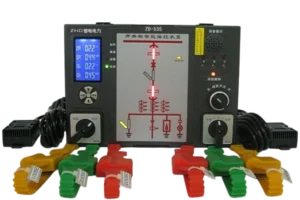
System Composition
Wireless Temperature Sensors
Installed on core heat-generating positions inside distribution cabinets, including switch contacts, busbars and cable connectors. They monitor real-time temperature of these points and send temperature signals to the wireless temperature monitor via wireless network. Features include high measurement precision, low power consumption and strong anti-interference capability.
Main Unit for Wireless Temperature Monitoring
Receives temperature data uploaded by wireless sensors and executes preliminary data processing. It forwards data to the early warning workstation via wired or wireless communication.
Temperature Monitoring & Early Warning Workstation / Platform
Serves as the core of the whole system, undertaking centralized data display, analysis, storage and abnormal warning. Users can check real-time temperature readings via computers or mobile APPs, and receive alarm notifications once temperature goes out of limit.
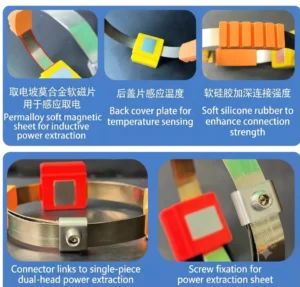
Installation Steps
Step 1
Pass an alloy power pick-up strip of appropriate length through the module.
Step 2
Insert the alloy power pick-up strip and soft silicone pad into the sensor. The corrugated side of the silicone pad shall face downward and align with the temperature induction position.
Step 3
Wrap the module around the power-taking section (main current path) to make the temperature measuring point closely contact the target measured position. Tighten the alloy strips on both sides, then tuck and overlap the two ends of the pick-up strip under the buckle.
Step 4
Tighten the screws with an Allen hex wrench, and push the soft silicone pad to both sides of the connector.
System Functions
- Real-time Monitoring Continuous real-time temperature tracking inside cabinets to capture temperature anomalies without delay.
- Wireless Data Transmission Eliminates the drawbacks of traditional wired temperature measurement, greatly improving system flexibility and stability.
- Data Processing & Analysis The workstation centrally displays, analyzes and archives all collected data and triggers automatic early warnings.
- Alarm Notification The system automatically sends out alerts when temperature exceeds preset thresholds to prompt maintenance staff for troubleshooting.
- Remote Supervision Remote access to temperature data through PC terminals or mobile APPs enables long-distance monitoring and management of distribution cabinets.
Application Scope
- Power Industry: Temperature monitoring for high-voltage switchgears and low-voltage distribution cabinets in substations, power distribution rooms and box-type transformers.
- Industrial Sector: Thermal monitoring of electrical equipment in machinery, chemical engineering, coal mining, automation and industrial and mining enterprises.
- Other Fields: Electrical equipment temperature detection for data centers, communication base stations, rail transit and more.
System Advantages
- High Reliability: Cutting-edge wireless temperature measuring technology and high-precision sensors guarantee accurate and trustworthy temperature data.
- Instant Response: Real-time temperature tracking enables early identification of overheating risks to avoid equipment breakdowns.
- Strong Flexibility: Wireless transmission adapts to temperature measurement tasks under various complex working conditions.
- Easy Maintenance: Simple installation and convenient daily upkeep reduce overall operation and maintenance costs.
- Enhanced Safety: Electrical isolation between measuring points and receiving devices via wireless transmission strengthens system safety performance.
Practical Application
This wireless temperature monitoring system has been widely deployed in numerous transformer substations, power distribution rooms and box transformers. For instance, the wireless temperature measurement system developed by Li’an Technology has been applied in power guarantee tasks during sustained high-temperature weather to effectively supervise temperature fluctuations inside high-voltage switch cabinets. Besides, the online temperature monitoring system for high-voltage switch contacts based on wireless network from Li’an has been verified in field practice, effectively supporting stable and reliable operation of power grids.
FAQ for Switchgear Temperature Monitoring
Q1: What is Switchgear Temperature Monitoring mainly used for?
A1: It monitors the real-time temperature of contacts, busbars and cable joints inside switchgear, gives overheat alarms and prevents equipment burnout or power accidents caused by poor contact and overheating.
Q2: Why choose passive wireless sensors for this monitoring system?
A2: Passive sensors harvest energy from the surrounding electromagnetic field without batteries or wiring. They fit narrow cabinet spaces well and avoid hidden risks of wired layout and frequent battery replacement.
Q3: What kind of switchgear can this system be applied to?
A3: It is compatible with high-voltage switch cabinets, ring main units, low-voltage distribution cabinets, box transformers and GIS equipment widely used in substations and distribution rooms.
Q4: How does the system send out alarm notifications?
A4: It supports on-site sound-light alarm, background platform pop-up reminder, and remote alarm via mobile APP or SMS, so operation staff can discover and handle faults promptly.
Q5: Is professional wiring required during on-site installation?
A5: No complicated wiring is needed. The sensor is fixed with an alloy strap directly on the heating part, featuring simple installation, short construction period and no power cut required for most cases.
Q6: Can historical temperature data be stored and traced?
A6: Yes. The monitoring platform records all historical temperature data and generates trend curves, which facilitates later equipment inspection, maintenance and fault analysis.
Q7: What anti-interference ability does the system have in strong electromagnetic environment?
A7: The wireless signal adopts anti-interference communication protocol, which can work stably inside high-voltage cabinets with strong electromagnetic interference without signal loss or misreporting.
Conclusion
As an efficient, safe and practical monitoring tool for power equipment, the Switchgear Temperature Monitoring wireless temperature measurement system for distribution cabinets plays a vital role in boosting the safety and stability of power system operation.


Reviews
There are no reviews yet.