Leave your message

-
Leon Zhang sales consultant
-
Email: zxl635973785@gmail.com
-
Phone/WhatsApp/Wechat: +86 13655813266

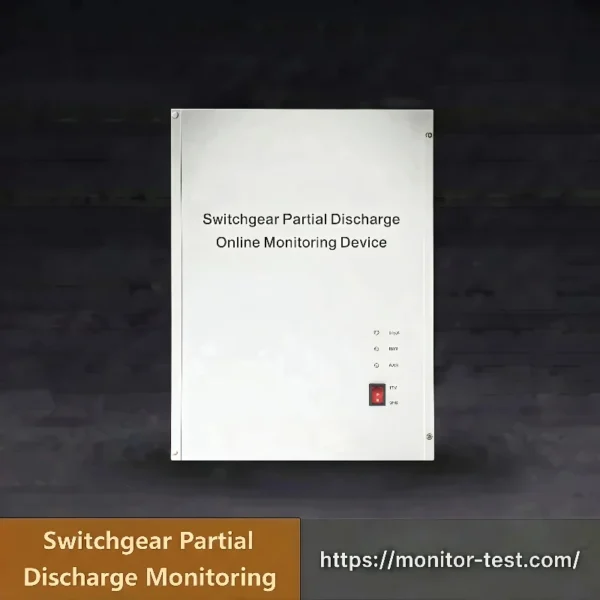
HF-W-703 Switchgear Partial Discharge Monitoring
Switchgear Partial Discharge Monitoring uses TEV and acoustic emission sensors to continuously detect insulation deterioration and hidden faults inside high‑voltage switch cabinets. It pinpoints discharge positions, issues timely early warnings and effectively prevents power grid accidents caused by insulation breakdown.
Send your requirements, we will quote for you within 12 hours
Overview of Switchgear Partial Discharge Monitoring
High-voltage switchgears are widely applied in distribution networks, and their safe operation plays a decisive role in power supply reliability. During production, transportation, installation and service, affected by manufacturing processes, installation methods as well as electrical, thermal, mechanical and environmental factors, the insulating medium inside switchgears will degrade continuously.
Switchgear Partial Discharge Monitoring can identify tiny equipment defects and analyze the degradation process of insulating medium during operation, enabling early warning of hidden risks in switchgears. This helps avoid massive losses caused by power supply failures and large-scale blackouts across the power grid.
Online Partial Discharge Monitoring System for Switchgears
System Introduction
This system serves for safety monitoring, early warning and protection of high-voltage switchgears. Co-developed with North China Electric Power University based on abundant field experience and professional theories, it is a high-performance digital online PD monitoring system integrating advanced sensors, signal processing, database and discharge identification algorithms.
It can identify typical partial discharge types and accurately locate faulty switchgears. Terminals acquire and preprocess on-site sensing data and upload them to the server. The server analyzes data against a multi-model expert database, outputs 2D and 3D trend graphs, and triggers alarms with discharge strength, position and time recorded for fault tracking.
With B/S framework, it supports data inquiry on PCs. Optional Web publishing function allows mobile and tablet access to alerts, facilitating intelligent and condition-based maintenance of switchgears.
System Composition
The system mainly consists of high-performance sensors, partial discharge monitoring terminals and a comprehensive partial discharge analysis server.
- High-performance Sensors: Transient Earth Voltage (TEV) sensors and Acoustic Emission (AE) ultrasonic sensors.
- Monitoring Terminals: Collect data from sensors, conduct preliminary analysis and processing, and transmit data to the comprehensive analysis server via network.
- Comprehensive Analysis Server: Receives real-time data uploaded by on-site terminals, supports mass data storage and real-time monitoring display. It also performs discharge condition evaluation, multi-level early warning based on discharge severity, unified equipment management and partial discharge alarm notification through data mining and signal identification technologies.
3. Technical Features
- Ultra-wideband signal acquisition covering a frequency range from 20 kHz to 1.5 GHz.
- Adopts multiple analytical algorithms and professional partial discharge detection technologies to accurately identify partial discharge activities and filter out on-site interference signals.
- Professional partial discharge analysis supports multiple digital signal processing technologies including Pulse Sequence Analysis (PSA), Frequency Domain Spectrum Analysis (FDS), Wavelet Analysis (WA) and Time-Frequency Map (TF Map) to extract authentic and valid partial discharge information. Based on Phase Resolved Partial Discharge (PRPD) patterns, the partial discharge pattern recognition algorithm implements Multivariate Statistical Distribution (MSD) to classify typical discharge types such as internal discharge, corona discharge and floating potential discharge.
- Precise fault localization to pinpoint the specific switchgear with partial discharge.
- Fully digital design with excellent electromagnetic compatibility and anti-interference capability to guarantee the accuracy of monitoring data.
- Diversified alarm modes: when partial discharge magnitude exceeds the threshold, the system actively sends alarm signals to superior management equipment via Ethernet, analyzes detailed discharge information and displays results in both 2D and 3D forms.
- Convenient equipment management: multiple on-site monitoring terminals can run independently with separate data recording, supporting local on-site display as well as data upload to the server for centralized viewing.
- Optional Web information publishing function enables users to check switchgear discharge waveforms, spectrum analysis and alarm information anytime and anywhere via dedicated client software or web browsers on data acquisition terminals, PCs and smartphones.
Technical Specification Table
| No. | Parameter | Technical Index |
|---|---|---|
| 1 | Measuring Channels | 2 ~ 32 channels |
| 2 | Sampling Resolution | 12 Bit |
| 3 | Detection Sensitivity | 50 pC (electrical signal) |
| 4 | Measuring Range | 50 pC ~ 10000 nC (electrical signal) |
| 5 | Maximum Permissible Error | 25% (electrical signal) |
| 6 | Monitoring Frequency Band | Channel A: 10 kHz ~ 5 MHz
Channel B: 10 kHz ~ 1 MHz |
| 7 | Supported Sensor Types | HFCT, Ultrasonic, TEV, UHF sensors |
| 8 | Channel Switching Time | ≤ 10 seconds |
| 9 | Recommended Monitoring Frequency | No less than 3 times per day |
| 10 | Power Supply | Single-phase AC 220 V, 50 Hz, 20 W |
| 11 | Operating Ambient Temperature | -10 ℃ ~ 50 ℃ |
Project Cases

FAQ – Switchgear Partial Discharge Monitoring
Q1: What is Switchgear Partial Discharge Monitoring?
A1: It is a real-time online monitoring solution that detects internal partial discharge defects of high-voltage switchgears via UHF, TEV and ultrasonic sensors. It realizes early warning, accurate fault location and insulation status evaluation to prevent insulation breakdown and grid accidents.
Q2: What sensors does the system adopt?
A2: The system supports multi-type sensors including UHF ultra-high frequency sensors, TEV transient earth voltage sensors and AE ultrasonic sensors. Multi-dimensional detection effectively eliminates monitoring blind spots and improves diagnosis accuracy.
Q3: Does the sensor require power outage for installation?
A3: Most sensors adopt non-intrusive magnetic installation. They can be installed during equipment outage without damaging the original switchgear structure and insulation performance, featuring fast construction and low transformation cost.
Q4: What is the detection sensitivity and frequency band?
A4: The system provides high detection sensitivity up to 50pC. The UHF monitoring frequency band covers 300MHz–1.5GHz, and the electrical signal channel covers 10kHz–5MHz, meeting full-band partial discharge detection requirements.
Q5: How many monitoring channels does the IED device support?
A5: The on-site monitoring IED supports up to 8 channels of synchronous signal acquisition, and the expandable measuring channels reach 2–32 channels, suitable for multi-cabinet and large-scale substation monitoring scenarios.
Q6: Can the system accurately judge and locate PD faults?
A6: Yes. It adopts professional algorithms such as PRPD pattern recognition and wavelet analysis to identify typical discharge types. It can accurately locate the faulty switchgear and output 2D/3D trend graphs for intuitive analysis.
Q7: What communication protocols and terminals does it support?
A7: It supports Ethernet communication and standard IEC 61850 protocol. Based on B/S architecture, it realizes data query, remote alarm and device management on PCs, mobile phones and tablets.
Q8: What are the main application scenarios?
A8: Widely applicable to high-voltage switchgears, ring main units and distribution cabinets in substations, power distribution rooms and industrial power systems for long-term online insulation condition monitoring.

Reviews
There are no reviews yet.