Leave your message

-
Leon Zhang sales consultant
-
Email: zxl635973785@gmail.com
-
Phone/WhatsApp/Wechat: +86 13655813266

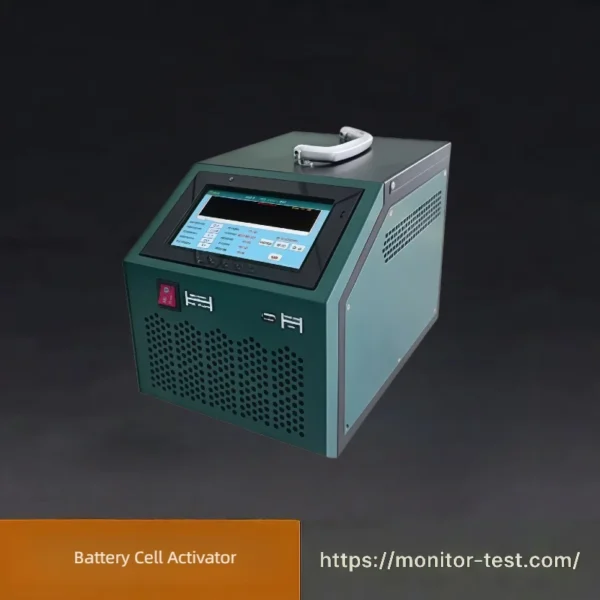
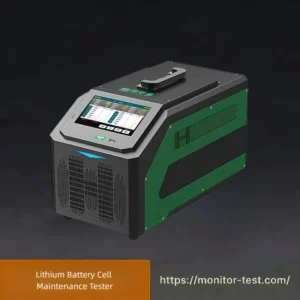
HF-BT-406 Battery Cell Activator
This battery cell activator supports charging, discharging and voltage equalization for single lead-acid cells. It revitalizes aging batteries, balances cell voltage differences, restores battery performance and enhances the overall consistency of battery packs.
Send your requirements, we will quote for you within 12 hours
The Battery Cell Activator is professional equipment dedicated to single lead-acid battery cells. It realizes independent charging, discharging and voltage equalization to activate aged cells, eliminate voltage imbalance and recover usable capacity. Widely applied in communication base stations, UPS and power storage battery maintenance to extend battery service life and improve battery pack overall performance.
Features of Battery Cell Activator
| Features |
|---|
| Three working modes are available: discharge, charge and activation modes can be configured, which can accurately measure the capacity of lagging single battery cells and perform charge-discharge cycle activation on them. |
| Touch Display: Equipped with a 7-inch display screen, the touchpad adopts military-grade multi-layer composite film resistive touch panel with strong anti-interference capability. The backlit display panel can clearly and normally display data in any environment. |
| Multiple Safety Protection Functions: Integrated with over-current protection, short circuit protection, over-temperature protection, reverse polarity protection and other safety features. |
| Intelligent Operation Design: Equipped with quick docking jacks for easy connection. The whole test process supports automatic recording and intelligent analysis without manual intervention. |
| Parallel Operation Function: Multiple units can be used in parallel to meet the discharge current demand above 300A. |
| Adopts High Molecular Polymer Positive Temperature Coefficient (PTC) Resistor: Low power consumption, strong surge resistance, avoiding red-hot phenomenon with high safety factor, and featuring over-current self-protection function. |
| High-frequency Pulse Width Modulation (PWM) Technology for Charging: Built-in Electromagnetic Interference (EMI) surge protection circuit and microprocessor control technology. |
| Charge-Discharge Parameter Preset Function: Built-in multiple commonly used charge-discharge templates for different battery types. Template data can be retained after power failure. Tests can start directly after power-on without repeated parameter configuration for simpler operation. |
| Equipped with Professional Analysis Software: Simultaneously displays voltage & current curves, single cell histograms and data tables. It can automatically generate EXCEL/WORD files, support printing and output complete test data reports. |
Operating Steps for Battery Cell Activator
Step 1 Pre-operation Inspection
Check the equipment, power cable and test leads for damage. Confirm the battery cell voltage matches the rated range of the activator. Ensure the working area is well ventilated.
Step 2 Wiring Connection
Connect the positive and negative test clamps to the corresponding terminals of the single battery cell strictly following polarity. Avoid reverse connection. Fasten clamps to guarantee reliable contact.
Step 3 Power On
Switch on the activator. Enter the main interface via the 7-inch touch screen. Select the target working mode: Charge, Discharge or Activation.
Step 4 Parameter Configuration
Choose built-in battery template or manually set parameters such as current, cutoff voltage and test duration. Save parameters if needed.
Step 5 Start Test
Confirm all wiring again, then tap start. The device automatically runs the test, records voltage, current and capacity data in real time.
Step 6 Test Completion
The activator stops automatically when reaching the preset threshold. View real-time curves and data on screen. Export data via USB if report generation is required.
Step 7 Shutdown & Disconnection
Cool down the equipment first. Power off the unit, then remove the test clamps from the battery cell. Store cables neatly.
FAQ – Battery Cell Activator
Q1: What is a Battery Cell Activator?
A: It is a professional maintenance instrument for single lead-acid cells. It integrates charging, discharging, cyclic activation and internal resistance testing. It performs charge-discharge cycling to eliminate sulfation on battery plates, recover capacity of lagging cells, and extend battery service life, widely used in substation DC system maintenance, UPS, communication power station battery inspection.
Q2: What working principle does the activator adopt?
A: It uses controlled constant current charge & discharge cycle mode. Multiple charge-discharge cycles dissolve lead sulfate crystals formed on electrode plates, reduce internal resistance and restore electrochemical activity of aged batteries. It is equipped with multi-protection mechanisms to avoid overcharging, over-discharging and overheating.
Q3: Which batteries can this activator work with?
A: Mainly applicable to 2V, 6V, 12V lead-acid batteries (VRLA, AGM, flooded lead-acid cells).
Not suitable for lithium-ion batteries, Ni-Cd or Ni-MH batteries without custom modification.
Q4: Where can I use this device?
A: Power substation DC panel maintenance, telecom base station battery maintenance, UPS battery system inspection, railway signal battery maintenance, battery factory type test, battery rental & maintenance companies.
Q5: Can it activate completely dead batteries with zero voltage?
A: If the cell suffers severe internal short circuit, open circuit or plate corrosion, activation cannot recover performance. It works best for batteries with sulfation, low capacity and increased internal resistance caused by long-term floating charge.
Q6: What are the core operation modes?
- Discharge Mode: Capacity test, measure actual battery capacity
- Charge Mode: Constant current charging for single cell
- Activation Mode: Automatic cyclic charge & discharge for cell regeneration
- Internal Resistance Test: Quickly evaluate battery health status
Q7: How long does one full activation cycle take?
A: Depends on battery capacity. For 100Ah 2V cell, one cycle normally takes 6–12 hours. 1–3 cycles are recommended for obvious capacity improvement.
Q8: What connection rules should I follow?
A: Connect the cables first to the activator, then to battery terminals. Strictly avoid reverse polarity. Finish test, remove battery clamps first, then disconnect the instrument. Ensure good contact to prevent heat.
Q9: Can I run activation online without removing the cell from the battery pack?
A: Not recommended. Isolate the target single cell from the whole battery string before activation. Online operation risks voltage impact on adjacent cells and instrument damage.
Q10: What safety protections are built in?
A: Reverse connection protection, overvoltage protection, overcurrent protection, over-temperature protection, low voltage cutoff, automatic stop once abnormal parameters detected.
Reviews
There are no reviews yet.