Leave your message

-
Leon Zhang sales consultant
-
Email: zxl635973785@gmail.com
-
Phone/WhatsApp/Wechat: +86 13655813266

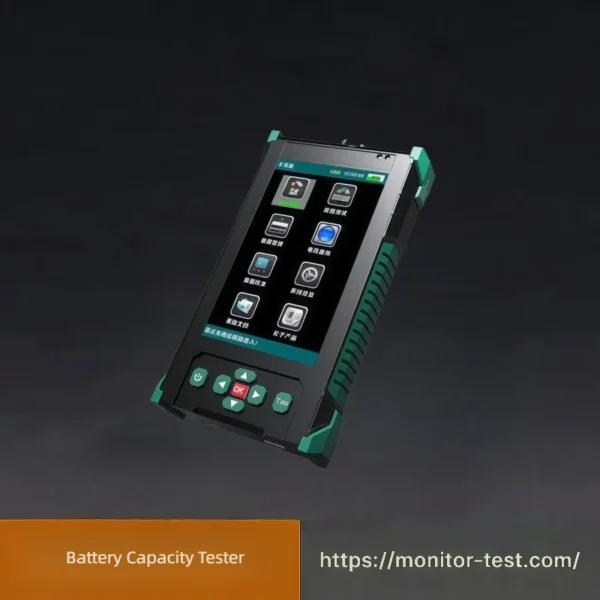
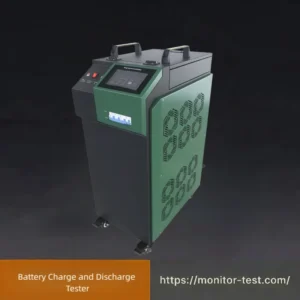
HF-BT-404 Battery Capacity Tester
The Battery Capacity Tester conducts controlled discharge tests to measure the actual capacity of lead-acid and lithium batteries. It continuously tracks voltage, current and test duration, stores full-process data and generates reports to assess battery aging and operational reliability.
Send your requirements, we will quote for you within 12 hours
Overview
The Battery Capacity Tester is professional testing equipment for assessing the actual capacity and technical condition of lead-acid and lithium batteries. By carrying out constant-current discharge tests, it continuously captures voltage and current changes throughout the test cycle. It supports data storage, inquiry and report export, helping engineers identify aging or underperforming batteries. It is widely used in communication base stations, UPS rooms, substation maintenance, battery factories and rail transit power systems.
Features
|
Feature |
Description |
|---|---|
| Multiple Measurement Modes | Supports internal resistance testing and performance evaluation for single cells, battery packs, and batteries with connection resistance (optional accessory) |
| Online Testing Capability | Enables both online and offline measurement; no disassembly or busbar disconnection required, with strong anti-interference performance |
| Compact Portable Design | Weight ≤ 0.5kg; handheld structure allows one-person operation with fully automatic measurement |
| Dual Operation Modes | Equipped with 5-inch touch screen for easy parameter setting and data analysis; physical keypad is user-friendly for operators wearing insulating gloves |
| 4-Wire Kelvin Measurement Algorithm | Accurately captures voltage drop on resistors to improve battery internal resistance measurement precision; compatible with over 98% of common battery connection modes and terminal shapes |
| Multi-Standard Compatibility | Pre-stored internal resistance reference values for various storage batteries; users can select corresponding range parameters to complete testing |
| Large Data Storage Capacity | Stores hundreds of test data groups for direct on-site query and analysis; data can be exported to PC software for in-depth analysis |
| Report Printing Support | Test records can be exported to Excel and Word, and printed in specified formats; streamlines file management and reduces workload |
Operation Instructions for Battery Capacity Tester
1. Pre-operation Check
- Confirm the battery voltage matches the tester’s rated measurement range.
- Inspect test cables and probes for damage, ensure clean contact surfaces free of oxide.
- Power on the instrument and complete self-check.
2. Wiring Connection
Connect the test probes firmly to battery terminals. Adopt 4-wire connection if available to eliminate contact resistance interference. Avoid loose wiring.
3. Parameter Configuration
Select the test mode: internal resistance test, voltage test or capacity estimation. Set corresponding battery specifications, threshold values and test duration as required.
4. Start Measurement
Initiate testing after verifying all settings. The tester automatically collects real-time data including voltage, internal resistance and current.
5. Data View & Storage
When testing finishes, view results directly on screen. Save valid data to local storage. You can export records to PC software for further analysis.
6. Generate & Export Reports
Export test data to Excel or Word formats. Print standardized test reports for filing.
7. Post-test Steps
Stop the program properly, power off the tester, then remove probes in reverse order. Clean probe tips for next use.
FAQ — Battery Capacity Tester
Q1: What type of batteries can this capacity tester test?
A: It supports VRLA, flooded lead-acid, gel and AGM stationary batteries. It is widely used for 12V/24V/48V battery banks for UPS, telecom power, solar energy storage and emergency power systems. Please confirm battery voltage range before ordering.
Q2: What is the difference between capacity discharge tester and internal resistance tester?
A: Internal resistance tester gives quick screening; constant current discharge capacity tester performs real discharge test to get actual Ah capacity, which complies with IEEE 450 / IEEE 1188 standards. Discharge test is the most reliable way to evaluate battery remaining life.
Q3: How to choose suitable discharge current for capacity testing?
A: Follow battery manufacturer specifications. For stationary lead-acid batteries, 0.1C discharge rate (10-hour rate C10) is standard. Do not use excessive discharge current to avoid inaccurate results and battery damage.
Q4: Can the machine test series-connected battery packs without removing single batteries?
A: Yes. It can discharge the whole battery string directly. If you need single cell voltage monitoring, optional cell voltage acquisition module is available.
Q5: Why do test results show lower capacity than nameplate value?
- The battery is aged, sulfated or has defective cells;
- The battery was not fully charged and rested sufficiently before test;
- Ambient temperature deviates far from 25℃; capacity needs temperature correction;
- Poor cable contact or corroded terminals cause extra voltage drop.
Q6: How to prepare batteries before capacity test?
A: Fully charge the battery, then rest for 2–24 hours to eliminate surface charge. Clean battery terminals to ensure good contact. Keep ambient temperature stable around 20–25℃. Disconnect loads and chargers during testing.
Q7: Does temperature affect capacity test readings?
A: Definitely. Lead-acid battery capacity decreases at low temperature. You shall apply temperature correction factor according to relevant standards when evaluating test data.
Q8: Can I pause the discharge test and continue later?
A: Most models support pause function. Frequent pause is not recommended; interruption may affect the authenticity of final Ah calculation. Better to complete one full discharge cycle continuously.
Q9: Can the tester automatically stop discharge?
A: Yes. You can set terminal cut-off voltage, discharge duration or target capacity. The equipment will automatically stop and alarm once any threshold is reached to prevent over-discharging batteries.
Q10: The machine cannot start discharge after wiring.
A: Check items one by one:
- Positive/negative polarity reverse connection;
- Loose or oxidized connection clamps;
- Battery voltage out of tester working range;
- Safety interlock protection triggered;
- Parameter setting error (cut-off voltage higher than battery voltage).
Reviews
There are no reviews yet.