Leave your message

-
Leon Zhang sales consultant
-
Email: zxl635973785@gmail.com
-
Phone/WhatsApp/Wechat: +86 13655813266

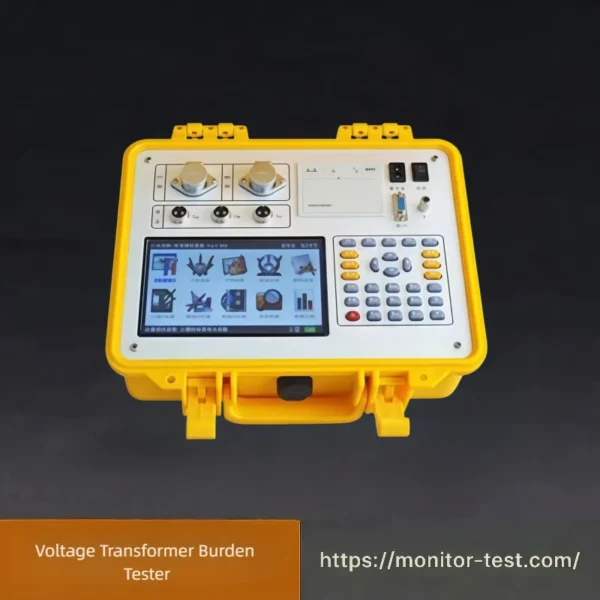
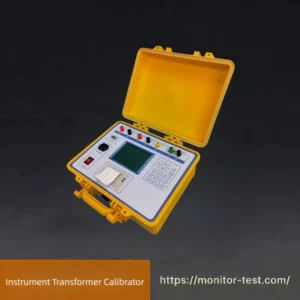
HF-IT-206 Voltage Transformer Burden Tester
This voltage transformer burden tester precisely measures the secondary burden impedance of voltage transformers. It supports on-site testing to check VT operating status and ensures accurate metering in power substations.
Send your requirements, we will quote for you within 12 hours
The comprehensive error of electric energy metering consists of the composite error of voltage transformers, composite error of current transformers, watt-hour meter error, and metering error caused by the secondary wire voltage drop of voltage transformers. Among these four types of errors, the metering error induced by VT secondary wire voltage drop is often the most significant. Excessive comprehensive metering error is a common critical issue in electric energy measurement.
The verification regulations for electric energy metering devices and relevant technical codes specify requirements for errors arising from the voltage drop in the secondary circuit of voltage transformers, which must be measured accurately and rapidly. The HF-IT-206 Transformer Secondary Voltage Drop & Burden Tester is developed to meet such requirements.
Technical Specifications
| Category | Item | Specification |
|---|---|---|
| Model | Model | HF-IT-206 |
| Test Purpose | Application | Measure secondary circuit voltage drop error of voltage transformers |
| Operating Conditions | Operating Temperature | 5℃ ~ 40℃ |
| Relative Humidity | <85% (at 25℃) | |
| Altitude | <2500 m | |
| Operating Frequency | 50Hz±1Hz | |
| Operating Voltage | 220V±5V | |
| Secondary Voltage Drop Section | Measuring Range | Ratio error: 0.001% ~ 19.99%; Phase error: 0.01′ ~ 599′ |
| Resolution | Ratio error: 0.001%; Phase error: 0.01′ | |
| Basic Instrument Error | DX=±(2%×X+2%×Y)±2 digits DY=±(Y×2%+X×2%×34.38)±2 digits |
|
| Voltmeter Accuracy | 0.5% | |
| Operating Voltage Range | 50 ~ 120 V | |
| Alarm Threshold
(Error Prompt) |
Ratio error>20% or phase error>600′; Voltage <2.0 V |
|
| PT Secondary Burden Section | PT Secondary Burden Test | Admittance measuring range: 0.1ms ~ 50.0ms Secondary voltage: 50V ~ 120V |
| Voltmeter Accuracy | 0.5% | |
| CT Secondary Burden Section | Impedance Measuring Range | 0.1Ω ~ 50.0Ω |
| Impedance Measurement Accuracy | DX=±(2%×X+2%×Y)±2 digits DY=±(2%×X+2%×Y)±2 digits |
|
| Ammeter Accuracy | 1% | |
| Physical Characteristics | Dimension | 260×350×150 mm |
| Weight | ≈6kg (excluding accessories) |
Operating Procedures for Voltage Transformer Burden Tester
- Confirm the VT secondary circuit is in normal operating status, then connect test leads to the corresponding secondary terminals.
- Power on the tester and select the VT secondary burden measurement mode.
- Set relevant transformer parameters according to on-site conditions and start measurement.
- Read impedance, admittance and burden data after stable sampling. Save records if needed.
- After testing, power off the instrument and remove all connecting wires safely.
FAQ | Voltage Transformer (VT / Potential Transformer) Burden Tester
Q1: What is a Voltage Transformer Burden Tester used for?
A: It measures the secondary burden impedance, apparent power (VA), conductance and susceptance of VT secondary circuits. It verifies whether actual load is within VT rated burden, evaluates ratio & phase error, avoids metering deviation and protection malfunction. Widely used in substations, power plants, meter calibration and commissioning.
Q2: What is VT burden, expressed in VA?
A: Burden is the total load connected to VT secondary winding, including meters, relays, cable impedance and contact resistance.
Formula:
Burden VA = U² / Z
U = rated secondary voltage (typically 100 V). Excessive burden will degrade VT accuracy class.
Q3: Which standards support the test results?
A: Compliant with IEC 61869-3, GB 1207, DL/T 448. Test reports can be accepted for site acceptance, FAT and periodic maintenance.
Q4: Can this tester work for both metering VT and protection VT?
A: Yes. It tests burden for measurement-class VT (0.2, 0.5 class) and protection-class VT (3P, 6P). Different burden limits apply for each application.
Q5: Single-phase or three-phase testing supported?
A: Supports single-phase VT, three-phase three-wire and three-phase four-wire VT circuits. Automatic phase sequence identification for three-phase field tests.
Q6: Should I disconnect VT secondary before burden testing?
A: Two modes:
- Offline test (Recommended): Disconnect VT secondary from the circuit, inject test signal directly to the load side to measure pure circuit burden.
- Live measurement: Some models support on-load test. Strictly follow safety procedures; VT secondary must never be open-circuited during live operation.
Q7: Why does the tester show negative burden reading?
A: Main causes: reversed voltage test leads, strong electromagnetic interference, or reactive power feedback from adjacent powered instruments. Solutions: Swap voltage terminals, shorten test cables, separate wires from high-current cables.
Q8: Test data fluctuates during measurement. How to fix?
- Check loose terminals and poor contact
- Avoid running near large transformers or high-current cables
- Enable average sampling function on the tester
- Replace aged test leads
Q9: Can I test VT secondary voltage drop together with burden?
A: Most integrated VT burden testers support secondary voltage drop + burden synchronous measurement, which calculates total metering error caused by cable impedance.
Q10: Critical safety precautions for VT secondary circuit?
- VT secondary shall NOT be open-circuited under operating conditions
- Strictly prohibit short-circuit on VT secondary winding
- Wear insulated tools; follow substation safety work permits
- Confirm wiring before switching on the tester
Reviews
There are no reviews yet.